



A New York has about 1,200 impalcatures less than the beginning of 2026. It was announced yesterday, Monday, October 19th, mayor Zohran Mamdani, presenting also two new models of structures that protect the sidewalks from the possible fall of materials during the construction work. According to the Department of Buildings (DOB), the reduction exceeds 15 percent in ten months and is the result of more frequent controls and stricter rules for owners who postpone face repairs.
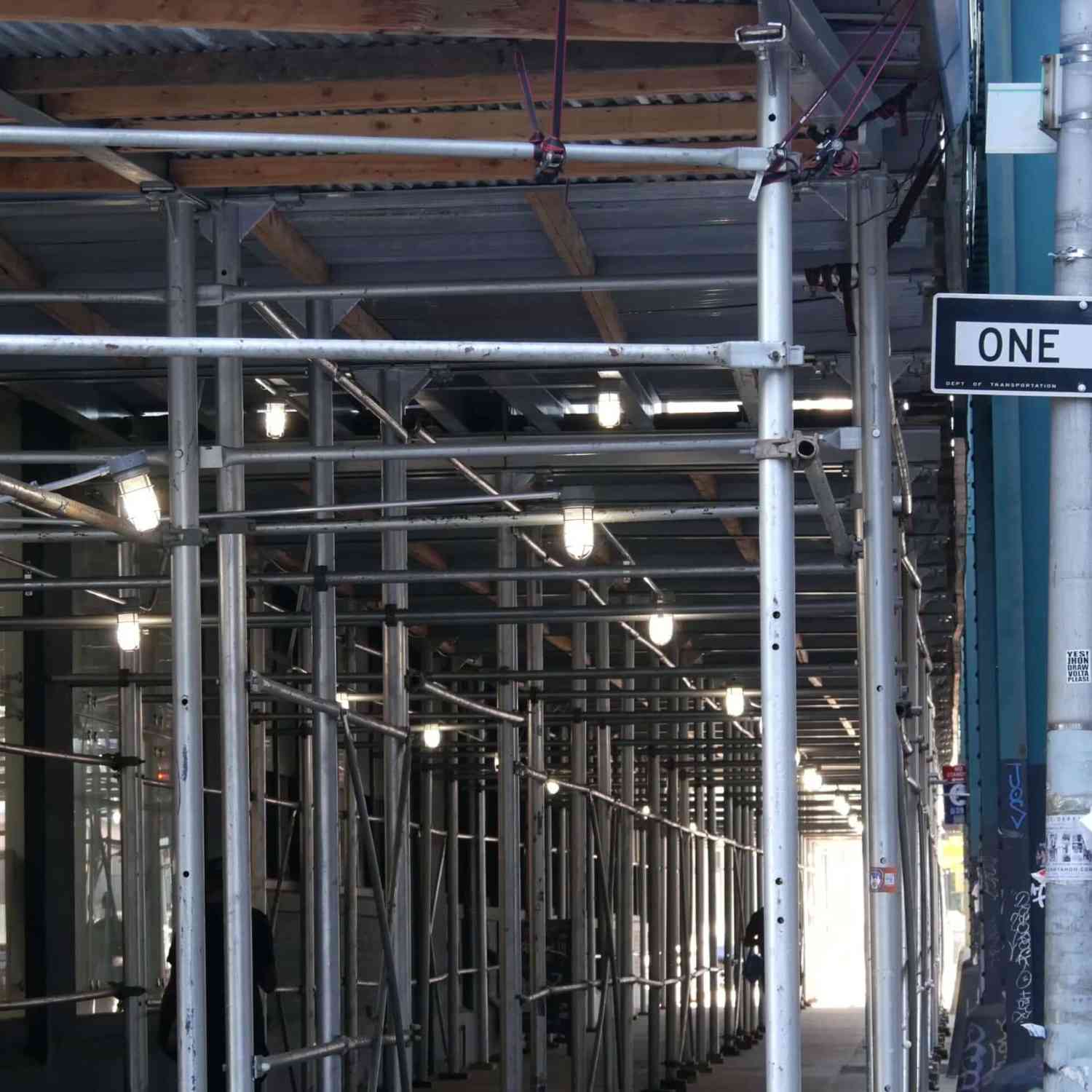
The structures are called sidewalk sheds and are a family presence for anyone who walked in Manhattan. They are generally green covers, supported by metal pipes and wood panels, which transform long stretches of pavement into covered passages. They serve to protect pedestrians from the fall of plaster, bricks or other materials, but in New York their use has become so widespread that some remain mounted for many years, even when there are no visible jobs.
The problem depends mainly on how the facades of buildings are handled. In New York, the owners of the highest six-storey buildings must periodically subject the external walls to security checks. When an inspection detects a danger to passersby, it may be necessary to install a protective cover and keep it until the end of repairs. For some owners, however, it was easier to continue paying the rent of the property than immediately facing the jobs, often very expensive.
The consequences are seen on the sidewalks. Covers darken shop windows, reduce natural light and occupy a part of the space available for pedestrians. In some cases they also hinder access to buildings and the passage of people with disabilities. According to the data recalled by the municipality in March last, the scaffolds arrived to cover altogether about 380 miles of pedestrian paths, more than 600 kilometers, equivalent to approximately 7.500 isolated citizens.
In order to reduce the number, the Municipality has modified the control procedures. The new provisions, which entered into force in August, provide for more frequent renewals of authorizations, obligations to document the progress of the work and higher sanctions for the structures maintained without a justified reason. The Department of Buildings can also intervene on the owners who do not start the necessary repairs.
The amendments derive partly from a package of laws approved by the City Council in 2025, as part of the Get Sheds Down initiative. The program had been initiated during the previous administration of Eric Adams and was continued and strengthened by Mamdani. The objective is to intervene on the reason why the covers are installed, instead of simply removing them: if a facade remains dangerous, remove the structure without repairing it would expose the passersby at the risk of falling materials.
One case is Highbridge Gardens, a public building complex in the Bronx. Here the scaffolding had been installed for over five years, covering avenues and green spaces between buildings. The New York City Housing Authority has allocated $14.4 million, from state funds, for face repairs, so as to allow the removal of protections. The municipality has also amended the rules that establish how far from the buildings should extend the covers, limiting in certain cases the occupation of the open spaces within the large residential and university complexes.
The second part of the programme concerns their appearance. On October 19, two new models were presented in front of the Department of Buildings in Lower Manhattan, designed by the architecture studio Practice for Architecture and Urbanism (PAU), founded by the architect Vishaan Chakrabarti.
The first, called Baseline Shed, uses a tilted cover made of transparent polycarbonate panels. The shape allows more light to arrive on the sidewalks and to leave the shop windows more visible. The project is available in different versions, suitable for both light and construction operations requiring more robust protection.
Credits: www.nyc.gov
The second model, Speed Shed, is designed especially for short work and emergency interventions. Instead of a completely closed cover, it uses a network designed to retain materials that might fall from above, while at the same time allowing the passage of light. The structure also has removable wheels that allow to move it more quickly between different yards.
Credits: www.nyc.gov
The two models are part of a larger project, which includes six alternatives to traditional green scaffolding. The other four were developed by PAU and the engineering company Arup, commissioned by the Municipality in February 2024 to rethink pedestrian protection. Among the solutions studied there is also a suspended structure, fixed directly to the facade of the building, which for certain works would allow to leave almost completely free the pavement below.
Credits: www.nyc.gov
The new projects were first presented in November 2025. The first prototypes made by Arup were installed in June in front of the Department of Buildings. Those shown on Mondays are therefore a further step of experimentation, not the introduction of completely new structures than already announced.
The designs belong to the city of New York and can be used free of charge by designers and businesses. It does not mean that the installation of new scaffolding will be free, but that you will not need to pay licenses to use the projects. Each installation must comply with the building rules and obtain the required permissions.
The Department of Buildings has to complete the procedures necessary by the end of 2026 to allow the general use of the six models. For the moment, prototypes and solutions remain waiting for the full application of the new rules.
For residents and traders the change will be above all visible on the street level: less busy sidewalks, greater natural lighting and shops that do not remain hidden for years behind metal pipes and wood panels. The protective structures will continue to be necessary, but the municipality wants to avoid that a measure designed to be temporary becomes a permanent presence in front of the buildings.
L’articolo New York wants to free the pavement from scaffolding proviene da IlNewyorkese.