



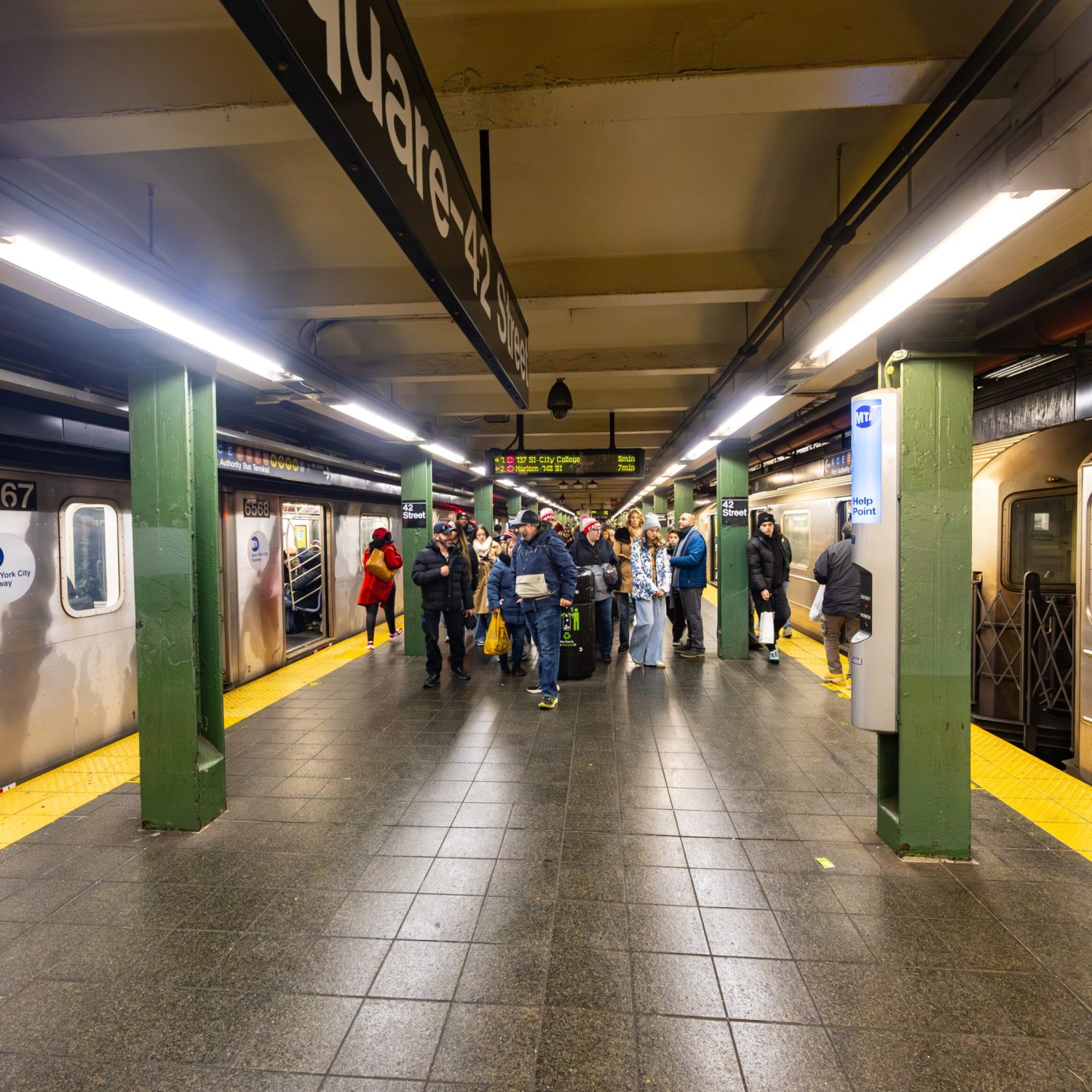
On some sections of the New York metro, to know where a train is still using signalling systems installed in the 1930s. They work through electrical circuits that detect the occupation of a certain section of track, without constantly communicating the exact location and speed of the convoy. It is a reliable technology in its principles, but that limits the number of trains that can circulate on the same line and makes it more complicated to manage delays.
Yesterday, Thursday, October 22, the Metropolitan Transportation Authority (MTA) announced the launch of the largest railway signal replacement project ever made in the city subway. The investment is $1.9 billion and covers the A and C lines between Brooklyn and Queens. The works, which will also include the replacement of tracks and exchanges, should end in 2032.
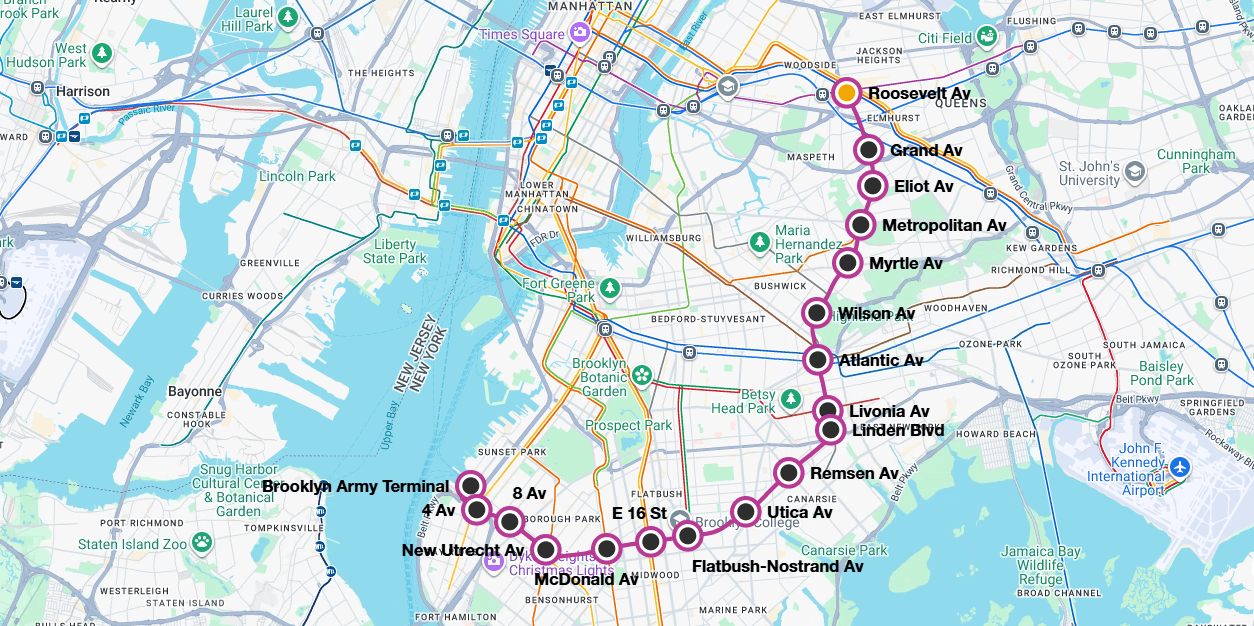
The project will be around 68 kilometers of tracks and 23 stations, along the route from High Street, Brooklyn, to Ozone Park–Lefferts Boulevard, Queens. According to data from MTA, the stations involved are about 350 thousand passengers on weekdays. The entire A line, the longest of the New York metro, is used on average by about 750 thousand people per day.
The new system is called Communications-Based Train Control (CBTC), a technology that allows trains and control centers to continually exchange information. Unlike traditional signals, which divide the railway into sections and allow the entrance of a convoy only when the next one is free, the CBTC follows with greater precision the position and speed of each train.
This allows to reduce the safety distance between two convoys without increasing the risk of collision. As a result, the MTA can pass more trains on the same line and better manage slowdowns and unexpected. The system also allows a largely automated management, although the presence of staff on board remains provided by the current contractual provisions.
The technology is already used on lines L and 7 and on some sections of the E, F, M and R. According to the data diffused by MTA, after the introduction of CBTC the punctuality of line 7 has passed from 68 to 91 percent, while on a stretch of line E, in Queens, the speed of trains has increased by about 10 percent.
The president of MTA, Janno Lieber, indicated problems to signals as the main cause of metro delays. During the presentation of the project he said that the equipment of the 1930s will finally be transferred to the Transit Museum, the New York transport museum, instead of continuing to regulate the movement of trains.
For passengers, however, the works will initially involve some discomfort. From November 7th to 16th the service of the A line between Rockaway Boulevard and Ozone Park–Lefferts Boulevard, in Queens will be suspended. The break will affect the stations of 104th Street, 111th Street and the terminus of Lefferts Boulevard.
The MTA will provide free replacement buses, while the A trains normally headed to Lefferts Boulevard will continue towards Howard Beach–JFK Airport. The first intervention will replace exchanges and about 76 meters of tracks near the station of 104th Street. Before travelling, you should check any updates in the MTA Planned Service Changes section.
The funding comes almost entirely from congestion pricing, the toll introduced in January 2025 for vehicles entering the Manhattan part south of 60th Street. The basic rate is $9 and the program was also designed to raise funds for public transport. The modernization of lines A and C is one of the interventions financed through these revenue, together with the purchase of new trains and the improvement of the accessibility of the stations.
The project had already been authorized in December 2025, when the Board of Directors of MTA approved the main contracts for the design and installation of new equipment. The announcement of 22 October marks the transition to the operational phase.
The planned duration, six years, also shows how complex it is to intervene on a subway that must continue working during the work. The MTA must replace equipment, cables, exchanges and control systems without being able to close for long periods entire lines used every day by hundreds of thousands of people.
Compliance with deadlines is not granted. A report commissioned by MTA itself and published in 2025 had identified delays between nine months and three years in four signal modernization projects. Two had also exceeded the expected costs. The agency claims to have introduced new design and construction methods to reduce time and expenses, but it will be necessary to check the results during the execution of the works.
After lines A and C, the next major project will cover B, D, F and M along Sixth Avenue, Manhattan. The aim of the MTA is to progressively extend the digital control of trains to a network in which they still live equipment built in very different periods.
For passengers in lines A and C, improvements will only come to the conclusion of the different phases of the project. In the meantime they will have to deal with temporary closures and changes to the service. The expected result is a subway in which trains can circulate closer and more regularly, without depending on signals installed almost a century ago.
L’articolo New York Metro still uses signals from the 1930s: now it will spend 1.9 billion to replace them proviene da IlNewyorkese.