


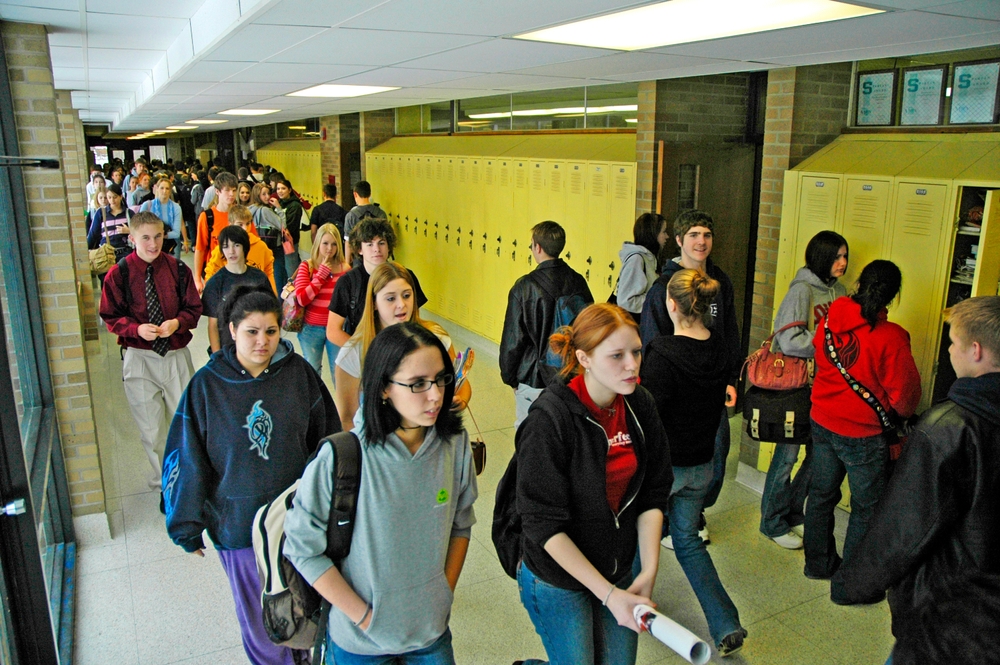
Each year more than 200 thousand students with disabilities enrolled in New York schools receive services established by their individualized educational plan, called IEP. They can be speech therapy, physiotherapy, occupational therapy or psychological evaluations. Schools are required to anticipate costs; for students enrolled in Medicaid, a part of the expenditure can be recovered through the public health program.
According to a new audit of the New York Comptroller’s office, in the three fiscal exercises between 2023 and 2025 the city’s school system left without refund of up to $431.6 million. The problem is the Department of Education, which manages an annual budget of approximately 45 billion dollars, the largest among municipal agencies.
The audit examined 17.2 million sessions of occupational, physical and language therapy provided to approximately 145 thousand students enrolled in Medicaid. The Department submitted requests for reimbursement for 9,3 million sessions, 54 percent of the total. The percentage went from 56 percent of 2023 to 47 percent of 2025, after climbing to 59 percent in 2024. According to the auditors, for 7.9 million already recorded performances at least one of the documents needed to obtain the payment. The estimated value of these refunds is $273.4 million.
To submit a request, the student’s educational plan, parental consent, a prescription that demonstrates the need for therapy, professional credentials and a note for each session. Just the absence of one of these elements to make the practice non-refundable. Requests must also be sent within fifteen months of the performance. The school system uses two different computer programs to store data, SESIS and EasyTrac, depending on the type of school attended by the student.
The figure of 431.6 million represents the upper limit of the estimate. It includes 132,8 million calculated on the basis of mandatory sessions that auditors did not find in the registers. The calculation comes from a sample of 180 students and assumes that those sessions were carried out without being documented. There is also another possibility: that the therapies provided by the IEP have not been provided.
Another 25.4 million comes from the choice of the Department to ask for reimbursement only for three of the ten categories allowed by Medicaid. Schools do not apply for medical evaluations and revaluation, psychological advice, specialized nursing and special transport. The auditors were able to estimate only part of these performances: enough data was missing for transport and nursing.
The total indicated in the audit also covers the total revenue lost by the city and the state of New York, which divides the refunds in equal parts. The potential share of municipal banks would therefore be approximately $216 million. Presenting all 431.6 million as money lost by the city alone is unpredictable, although the number of services already documented for which no request has been sent.
The Department of Education claims that the audit has included non-refundable sessions and that at least 232 million dollars should be excluded from the calculation. He also challenged the use of the sample of 180 students to estimate the performance absent from the registers. The report admits that some requests relating to the last few months examined may have been submitted later, within the window provided by Medicaid. The auditors still consider prudent their estimate and recall that the sample was reduced after the objections of the Department.
Precaution in the compilation of the practices has its own logic: in 2021 a verification of the federal inspectorate of the Department of Health challenged the State of New York 439 million reimbursements for school health services, because the methods used to calculate them or the available documentation were not sufficient. That control was about another period and a different reporting system, but it shows the risk of asking for refunds without being able to justify them.
The difficulties of the national school system have been known for years. A previous audit published in 2021 estimated up to $179.7 million of refunds missing for the 2018-2019 school year. The Department had accepted 25 of the 30 recommendations then. Five years later, three, half eight and nineteen are applied.
The Department says it has improved the collection of parental consents, access to Medicaid identification codes and procedures to obtain prescriptions. He is also introducing MedSys, a system that should automatically identify the refundable benefits and report missing documents. The first release was scheduled for 2024, then it was postponed several times; the full activation is now indicated for December of 2026.
For students, the question depends on what happened at sessions absent from the registers. If they were made, the city lost the refund because no one documented them correctly. If not, schools did not respect the student’s educational plan. Advocates for Children of New York argues that every year thousands of pupils end classes without even receiving one of the sessions planned. The audit does not allow to distinguish precisely the two cases, and it is precisely this lack of data to make the problem more difficult to correct.
L’articolo New York schools have not asked hundreds of millions of Medicaid refunds proviene da IlNewyorkese.