




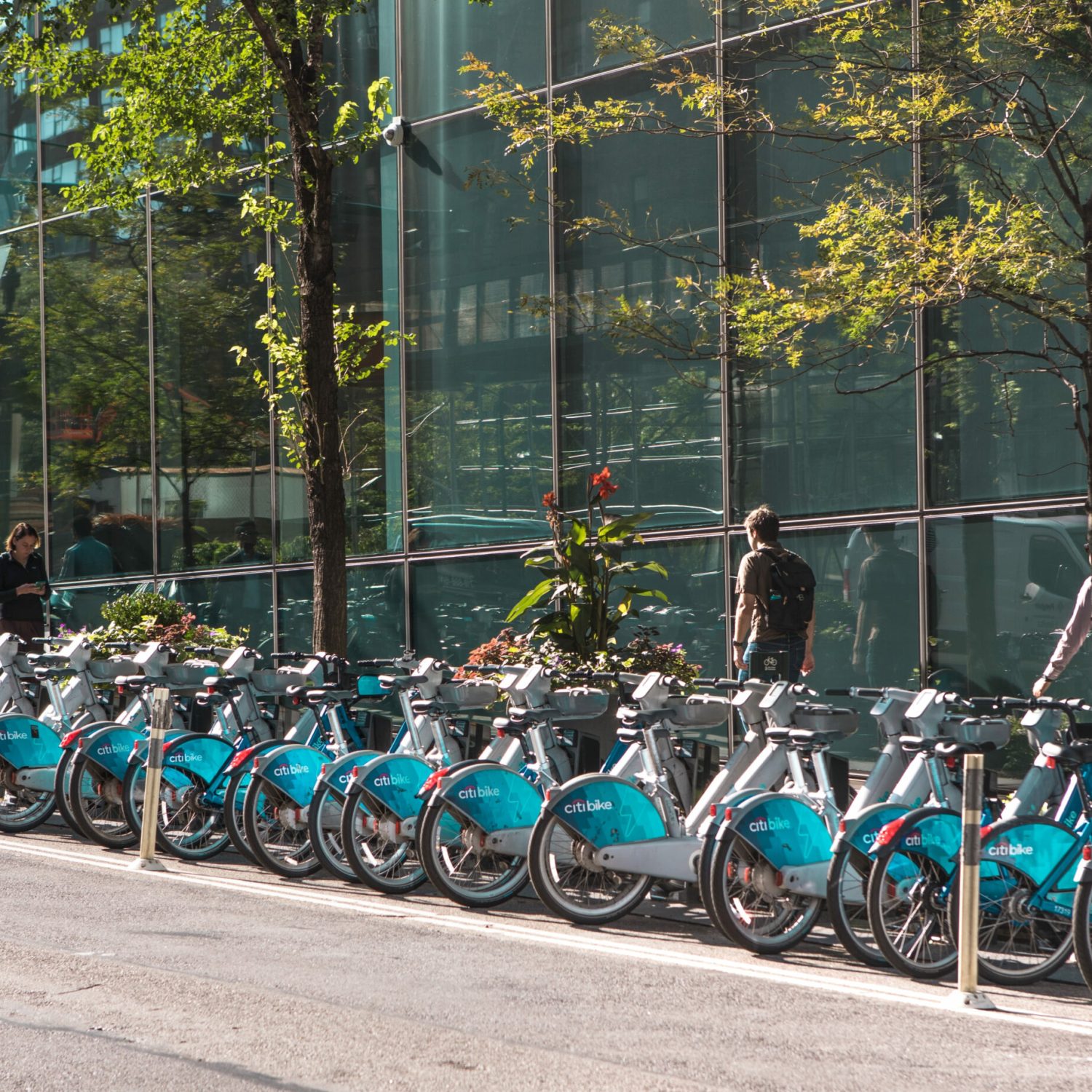
Citi Bike, New York’s shared bike service, has completed a new phase of expansion in the city’s suburbs. Yesterday, Thursday, October 15, Mayor Zohran Mamdani and the Department of Transportation (DOT) announced the installation of over 230 new stations and 3,700 parking spaces between Bronx, Brooklyn and Queens. The intervention, begun in September 2025, brings bicycles shared in seven neighborhoods that so far were not served by the system.
The new stations were installed in Norwood and Riverdale in the Bronx, Bay Ridge, Kensington, Brownsville and East New York in Brooklyn and Forest Hills in Queens. The works started from Bay Ridge and ended in East New York, where the arrival of shared bikes adds an alternative to everyday travel in a residential area rather far from downtown Manhattan.
According to the data reported by the municipality, the expansion increased by about 26 square kilometers the surface covered by Citi Bike, bringing it altogether to about 224 square kilometers. The service is now in an area where 62 percent of the population of New York live. It is a measure of geographical coverage: it does not mean that all these residents use bicycles or have a station immediately under the house.
Citi Bike had been launched in May 2013 with 332 stations and about 6,000 bikes, mainly concentrated in Manhattan and the central areas of Brooklyn. In the following years the network gradually extended to the Bronx and Queens, but the distribution of stations remained uneven. The latest expansion concerns some of the remaining neighbourhoods on the edge of the network, where travel can require long bus routes or more changes with the subway.
The use of new stations suggests that the service can find space even far from the tourist areas. In Bay Ridge, where the first installations date back to September 2025, users have already performed over 75 thousand races. In Norwood, in the Bronx, more than half of the trips from the new stations take place through reduced fare subscriptions, reserved for certain categories of residents. The data indicates a significant demand also among people using the facilitated programs, although it does not allow alone to measure how many have replaced car trips or by public transport.
Citi Bike is managed by Lyft through an agreement with the Municipality. The DOT cooperates with local communities to identify the points in which to install stations, trying to connect residential areas, public transport stops and major neighbourhood destinations. Lyft instead deals with the installation, maintenance and operation of bicycles and stations.
The ordinary annual subscription costs $239, while a single ride with a traditional bicycle costs $4.99 for the first 30 minutes. Electric bicycles provide additional costs calculated per minute. The Reduced Fare Bike Share program instead offers a $5 per month subscription to residents who meet certain economic requirements and suitable members of Community credit cooperatives. Facilitated rates can make the service more accessible, especially for those who use it regularly to get to work, school or metro stop.
The increase in stations, however, does not automatically solve system problems. As noted by Gothamist, the actual availability of bicycles remains an important issue, especially in the districts far from the centre. A station can be temporarily unusable because there are no bikes to take or because all the spaces are occupied and it is not possible to finish the ride.
The problem was also highlighted by an analysis of the New York Account Controller’s office, which had found more frequent disservices in some low-income areas and network peripheral areas. The report reported particularly obvious difficulties in the Bronx. To assess the effectiveness of the expansion it will not be enough to count the new stations: it will be necessary to verify that they are supplied with bicycles and that there are places available to return them.
The municipality announced that during the autumn Lyft will also install hundreds of new locations in the already served neighborhoods, especially where the demand is higher. The areas concerned include Midtown and Chelsea in Manhattan, Williamsburg, Greenpoint and Gowanus in Brooklyn. In this case it is not a matter of reaching new neighborhoods, but of increasing the capacity of the existing network.
Finally, there remains an important difference between the five districts of the city. Staten Island is still completely excluded from Citi Bike, while large areas of Queens and Brooklyn remain outside the service area. The conclusion of the last expansion is therefore not equivalent to universal coverage.
L’articolo Citi Bike expands into seven new New York neighborhoods proviene da IlNewyorkese.