



On Monday the New York Governor Kathy Hochul went to Harlem–125th Street station to celebrate a result that, for the Metropolitan Transportation Authority, is not quite ordinary. The main part of the work on the Park Avenue Viaduct, one of Manhattan’s most important railway traits, was completed five years ahead of the initial program and with an expense of 765 million dollars, 195 million less than the 960 estimates.
The viaduct is the elevated structure on which pass the four Metro-North tracks along Park Avenue, between East Harlem and the Harlem River. It is used by 98 percent of the company’s trains and by all those who enter and exit from Grand Central Terminal. On a normal day there are about 750 trains and 260 thousand passengers. The structure is 133 years old and almost half of the beams that supported it were still back in the late nineteenth century.
The work began in October 2023 and mainly covered 1.8 miles of viaduct between East 110th Street and the Harlem River Lift Bridge. Overall, 196 sections of the structure were replaced and over 12,600 feet of railway infrastructure. The first phase, between 115th and 123rd Street, had already been completed in October 2025, 21 months before the planned. The last segment of the second phase was installed on the weekend of 25 and 26 July.
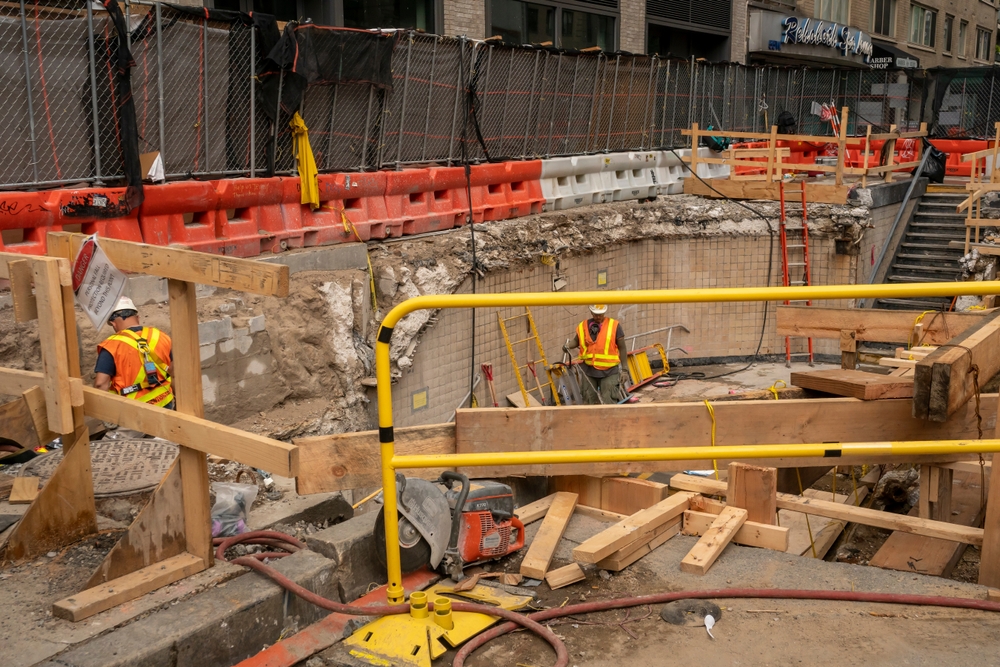
The main reason why the construction site went much faster than expected is its organization. A substantial part of the new structure was not built directly over Park Avenue: the large bridge elements were prefabricated elsewhere, transported to the place and then installed during work windows of 48 hours on weekends. To move the MTA and the company Halmar have designed special portal systems, able to lift sections from almost 190 thousand pounds and place them directly on the viaduct.
This system has allowed us to avoid one of the most complicated problems in New York railway works: having to choose between moving forward the yard and moving forward the trains. In the 28 weekends used for replacements, two of the four tracks were closed while the others remained in service. Binary pairs were also built protected areas of work, so that workers could work while trains passed a short distance. According to MTA, the entire operation was carried out without causing the delay of a single train.
But to say that the whole project is already finished would be slightly unpredictable. The structural replacement of the viaduct has been completed five years in advance, i.e. the most complex part of the work. Some rails remain replaced, the installation of the cables and the removal of the fences and temporary beams: according to MTA these activities will continue until September 2027, which still means closing the yards with four years of advance on the roadmap.
The result has also attracted great attention to the recent history of the agency. For years the MTA has been one of the most mentioned examples when discussing exceptionally high costs of railway infrastructure in the United States. East Side Access, the project that brought the Long Island Rail Road trains to the new Grand Central Madison, had initially been designed to be completed many years before its opening in 2023 and eventually cost around $11.2 billion. During the construction it had come to be estimated in approximately 3.5 billion dollars for each mile of new tracks, a figure enormously higher than that of similar projects made in other countries.
The Park Avenue Viaduct case, however, does not automatically show that MTA has solved its problem with large yards. It is a project very different from the construction of a new metro line: it was above all to replace an existing elevated structure, along a corridor controlled directly by the agency. Digging tunnels under Manhattan, moving under services or coordinating works with other railway companies introduces problems that were much more limited here.
You can see it from another Metro-North project, the Penn Station Access, which will have to take the New Haven Line trains to Penn Station and build four new stations in the Bronx. It had to be completed in 2027, but the MTA now foresees the conclusion in 2030. The agency attaches much of the delay to the difficulties in coordinating the closures of the tracks and the work with Amtrak, owner of the railway line used by the project; however, in the documents of the MTA there are also problems related to the work of the contractor. The budget is currently about 2.9 billion dollars.
And it is above all on the next yards that you will understand how the experience of Park Avenue is replicable. The second phase of Second Avenue Subway, which will extend the Q line up to 125th Street, has a budget of just under $7 billion. The Interborough Express, the new line between Brooklyn and Queens, is estimated at 5.5 billion. Both are part of a much larger investment phase: the MTA infrastructure plan for 2025-2029 is worth a total of 68.4 billion dollars.
This is why Park Avenue Viaduct is interested in the MTA even beyond the 17 streets of East Harlem on which it runs. The method used reduced the time spent working directly on the tracks, made the closures of the weekend more predictable and allowed to maintain the service. They are relatively simple advantages to describe, much less to reproduce in different yards. To understand if the MTA has really learned how to build faster and spending less will therefore need other projects concluded in the same way.
L’MTA finished a large yard with five years in advance and less budget than expected comes from IlNewyorkese.