

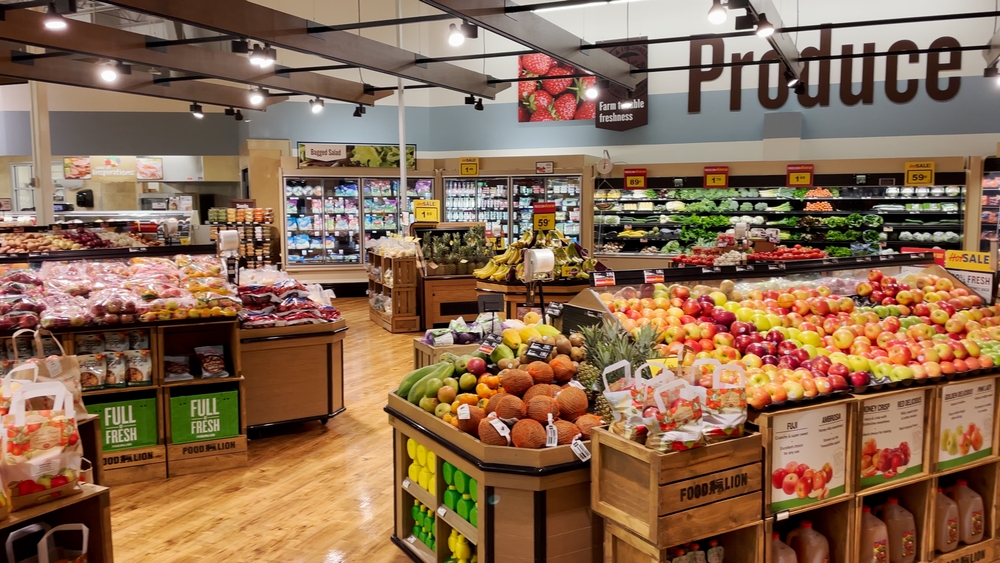
The mayor of New York Zohran Mamdani has given a precise measure to the promise, made during the election campaign, to use supermarkets supported by the city to make spending less expensive. In the five shops provided by the N.Y.C. program. Groceries, one per borough, a rather wide selection of food products will be sold with a 30 percent discount compared to normal retail prices. The project had been announced in recent months, but until Monday, July 27 had not yet been established how much lower prices would be. The discount was officially presented by the Mamdani administration along with the first details on the operation of the shops.
The reduction will cover all fresh fruit and vegetables, meat and fish, as well as twenty categories of common products. Among those indicated so far are milk, cheese, bread, pasta, yogurt, butter, rice, legumes and dried fruit. The rest of the products in the shops will be sold at market prices. As Mamdani explained during the press conference, once a month the city will establish the reference price for the so-called core basketball, the basket of essential goods, and from that value will be applied the reduction of 30 percent. Prices will remain still until the next month, avoiding at least for these products the weekly variations that are normally found in supermarkets.
According to the calculations of the New York City Economic Development Corporation, the agency that is organizing the program, for a family that made a substantial part of its spending in the new supermarkets the average savings would be about 90 dollars a month, just over a thousand dollars a year. The same estimate of the administration says that the discount on the essential basket would reduce altogether about 15 percent an average food spending: therefore 30 percent announced by Mamdani does not concern the entire shopping cart.
The shops will be municipal especially for the way they will be financed and regulated. Daily management will be entrusted to private companies with experience in the field, which will have to deal with suppliers, warehouse, staff, safety and assortment. The city will instead make available already equipped spaces, will support the costs of realization and will not charge the operators rent and taxes. In return it will impose certain conditions on prices and work: wages and benefits will have to be sufficient to support a family and the operators will have to sign a labor peace agreement, which allows employees to organize unionly without interference. On Monday, NYCEDC also opened the procedure to choose operators.
To build and equip the five supermarkets the city budget has allocated 70 million dollars. It is a capital expenditure and therefore does not yet say how much it will cost to make the system work every year. On this point the project is less defined. During the hearings on the city budget the EMCDDA had explained that the elimination of rent, real estate taxes and initial costs would be a first form of economic support and that the mechanism to cover part of the operating expenses would be defined together with the managers.
The first store should open by the end of 2027 in The Peninsula, a major redevelopment intervention built on the area of the former Spofford juvenile prison, in Hunts Point, in the Bronx. The supermarket will extend over just under 1,900 square meters. A second location was located in East Harlem, near La Marqueta: it will be built from scratch and should be ready in 2029. Only the latter will cost about $30 million. For Brooklyn, Queens and Staten Island the city is still looking for space. In recent months the administration had indicated The Peninsula as one of the first offices, while the other boroughs are still in progress. The goal is to have all five open supermarkets by the end of the mandate.
The proposal starts from a rather obvious problem in New York. According to the data cited by the administration, food prices in the city increased by almost 66 percent between 2013 and 2023; at national level they grew by about one third since 2019. In the meantime, the use of food assistance facilities has remained much higher than previous levels of pandemic. In his speech on the first hundred days of administration, Mamdani had already indicated the cost of spending among the central problems that the program of municipal supermarkets should face.
The most controversial part concerns the effects on independent supermarkets and bodegas in the neighbourhoods concerned. A store that does not pay rent or real estate taxes and that receives public support can afford prices that a private competitor would hardly succeed in replicating. The Multicultural Business Coalition, which represents dozens of business associations, has announced that it is ready to sue the city. As told by the New York Post, Group President Frank Garcia argues that a indirectly funded discount with public money on the most purchased products can subtract customers to activities that already work with reduced margins.
Mamdani has tried to reduce this overlap by excluding from public supermarkets some important products for bodegas revenues: they will not sell hot food, alcohol, cigarettes or lottery tickets. However, it is only a partial protection, because milk, bread, meat, fruit and vegetables are also sold by private shops. During the presentation of the program, the administration argued that five supermarkets can live with over a thousand food activities already in the city. The effect will depend mainly on where the three locations will still be opened and how many customers will be able to attract.
There is then a scale problem. Community Food Advocates, a favorable organization to the idea of public supermarkets, had already observed before the settlement of Mamdani that five stores would probably be too few to get from the suppliers much lower prices thanks to the only purchasing power. In an analysis reported by the NYCity News Service, the group had suggested a network of twenty stores, claiming that a larger structure would have greater ability to negotiate with wholesalers and manufacturers. The reduction of 30 percent announced now from the city seems therefore to depend to an important extent on public support to costs, more than from exceptionally low purchase prices.
Also for this reason some observers have asked the administration to make it clearer how much it will cost to maintain the program. Andrew Rein, president of the Citizens Budget Commission, said that not only the annual cost of supermarkets should be known, but also how many New Yorkers can use them and what effects they will have on the surrounding activities. As NBC New York has reconstructed, the point is above all the proportion between the size of the intervention and that of the city: five shops can produce significant savings for those living nearby, but they are too few to directly change the cost of spending for over eight million inhabitants of New York.
The discount will also be available regardless of income. However, the administration is studying systems to prevent someone from buying large amounts of subsidised products to resell them. Among the hypotheses discussed by the EMCDDA during the announcement of Monday there is a verification of the residence similar to that used for the public libraries card, which would allow to reserve the program to New Yorkers and control abnormal purchases. Details have not yet been defined.
The Economic Development Corporation, whose Mamdani leader has just appointed two rather different figures. Anthony Shorris, who has worked for decades in the city administration, will be president and CEO; Lina Khan, former president of the Federal Trade Commission and noted above all for his work on antitrust, will lead the board of directors.
The first test will then arrive in 2027, when it should open the Hunts Point store. Cash savings are incorporated into the project: if the program will work as expected, a part of the products will cost by definition 30 percent less.
L’articolo New York City supermarkets will sell some foods with a 30 percent discount proviene da IlNewyorkese.