


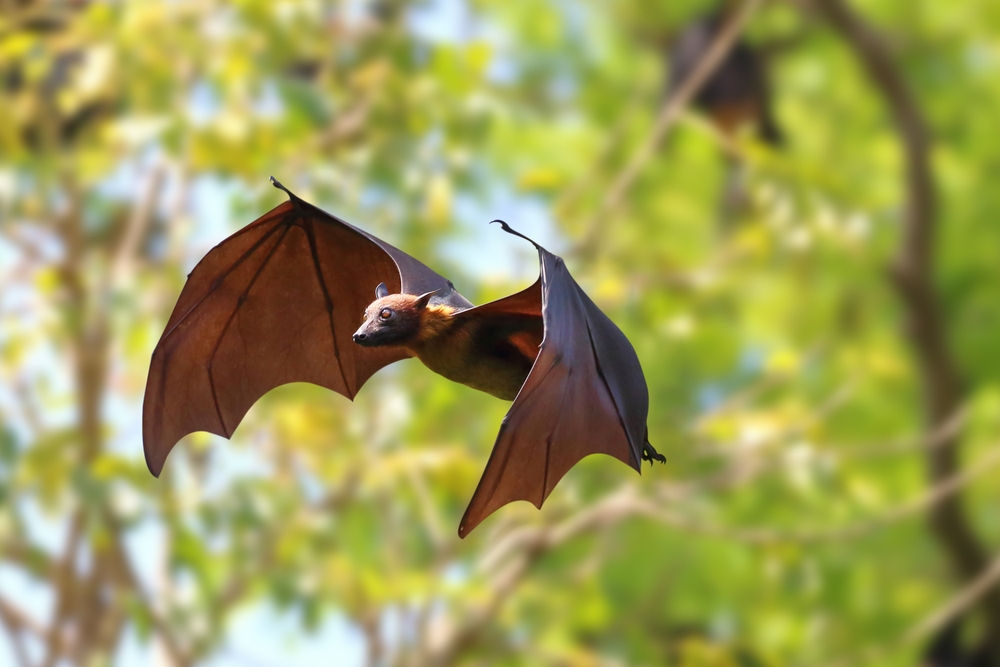
At night, over the traffic of New York, there is a frequent street go that almost no one notices. It is not that, higher in altitude, of planes and helicopters, but of that space in the middle: it is the one occupied by bats, that fly among the trees of the parks, along the water streams and around the buildings fast enough to be exchanged for small birds. Nine species live in New York: some migrate south during winter, while others remain and go into hibernation. The city was observed in all five boroughs; a research conducted in the Bronx identified five through the recording of ultrasonic calls.
Studying these animals is complicated. Their verses have frequencies that the human ear cannot perceive and most of their activity takes place when it is too dark to distinguish them. The researchers then use microphones capable of recording ultrasound and programs that compare the form of references to those of different species.
One of these devices remained for just over a year in Madison Square Park, a green space of just 2.5 hectares surrounded by Midtown Manhattan buildings. Between January 2022 and January 2023 he recorded 10,936 bat passages, distributed between March and November. Four species have been identified: the eastern red bat, the silver plated one, the brown serotine and the singing bat. The data measures the number of captured sound sequences, so one animal can have been recorded many times: it is not a census of the population. It shows that even a small and very popular park can be used regularly to hunt or as a stop during migration.
The same happens above the Javits Center, the large congress center near the Hudson River. Its green roof, built during the renovation completed in 2014, became a sort of lawn elevated between Manhattan’s infrastructure. The NYC Bird Alliance monitors have observed five species of bats, as well as 65 species of birds and hundreds of arthropods. The recordings showed that the activity of bats increases together with the presence of moths, one of their main sources of food.
The city offers bats two resources that in the most urbanized areas would seem scarce: places where to rest and insects to eat. The parks, tree-lined cemeteries, gardens and green roofs form a discontinuous network of hunting areas. Buildings, bridges and cracks in structures can replace the cavities of the trees and, for some species, caves. The built spaces also tend to be warmer during the winter, a useful feature for animals that tolerate little temperatures.
This does not make New York a favorable environment for every bat. The species capable of living with artificial light, noise and fragmentation of the habitats are advantaged; those that depend on large forests or particular hibernation sites remain more vulnerable. In Madison Square Park, for example, 96 percent of the identified calls belonged to the eastern red bat, a migratory species that shelters on the trees and seems to better tolerate urban lighting.
The composition of the town’s fauna also depends on the consequences of white nose syndrome, a disease caused by a fungus identified for the first time in the State of New York in 2006. During the hibernation the fungus irritates the skin of the bats, makes them wake up repeatedly and forces them to consume the reserves of fat before the end of winter. In some species that hibernate in the caves, such as the small pipistrello brown and the northern wasplier, the populations decreased by 75-90 percent.
Un cucciolo di pipistrello con la sindrome del naso bianco
Urban environments do not stop the disease, but can promote species that are less affected or follow different strategies, such as migratory bats that spend winter elsewhere. For this reason a greater activity recorded in the city does not necessarily mean that all bats in the region are recovering. It can also indicate a change in the composition of the species, with the more adaptable ones that occupy the spaces left free from the others.
The bats in the New York area eat mostly insects. A research published in 2025 found in the guan of brown serotine and eastern red bat the DNA of the maculated lantern, the invasive insect arrived in the United States from Asia and spread rapidly in New York and New Jersey. The traces were more frequent in the period when the insects reached the adult stage, showing that the bats had begun to insert them into their diet. They will not just eliminate infestation, but they can help contain it and help researchers understand where it is spreading.
Their ecological utility does not make it advisable to approach them. Bats can transmit anger and it is not possible to understand from the appearance if an animal is infected. Between 2014 and 2023, little more than 3 percent of the specimens sent to the state health authorities to be analyzed was positive. It is a sample composed mainly of animals who had already had suspicious contacts with people or pets, and therefore does not represent the percentage in the general population. The indications remain simple: do not touch a bat and ask for medical assistance after a possible contact, even when you do not see a bite.
In the coming years the city’s bat community could change again. A study published in June on the American Museum Novitates documented in the Meadowlands of New Jersey the presence of the Brazilian bat from the free tail, a species that on the eastern coast of the United States had been observed more south. Researchers have linked its progressive expansion to the north to the increase in winter temperatures. Approximately 85 percent of the calls recorded in the study came from the Meadowlands, a large wet area restored in the New York metropolitan area.
This species often uses bridges and buildings as shelters, flies for long distances and can search for food in large green spaces even when they are surrounded by the city. The models of the study predict an increase in observations over the 40th parallel, which also crosses the New York area. His appearance in Manhattan or in other boroughs is not yet documented, but the Hudson section separating it from New Jersey would not be a major obstacle for an animal capable of covering more than one hundred kilometers in one night.
L’articolo New York is a surprisingly suitable city for bats proviene da IlNewyorkese.