


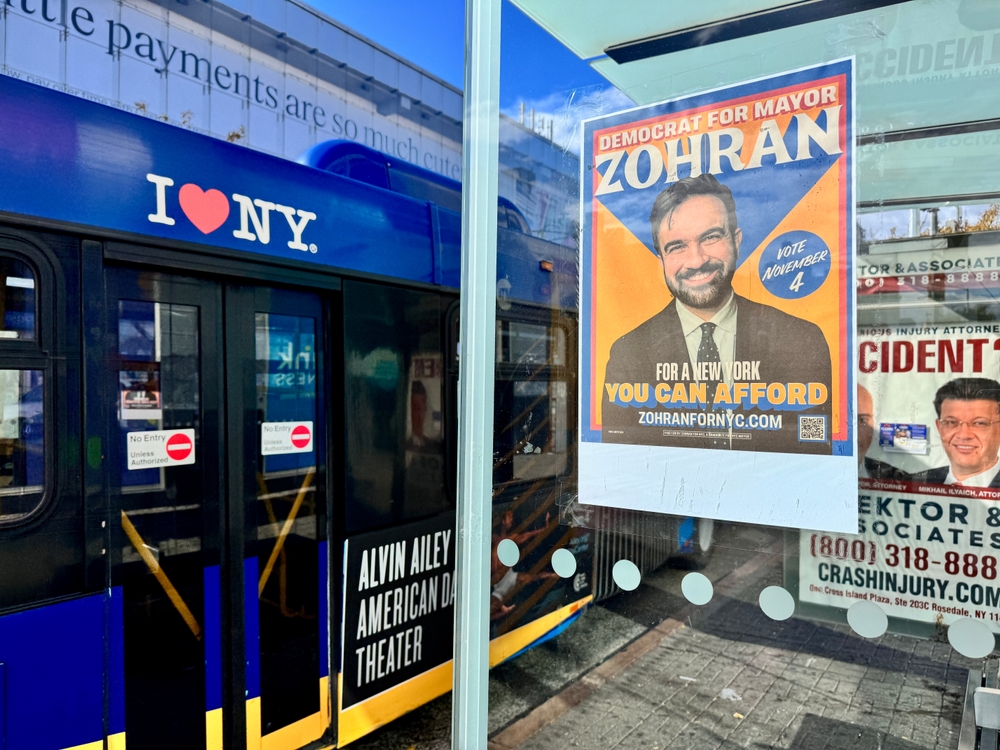
Zohran Mamdani’s electoral battle horse on transport, making New York buses free, is clearly the most difficult to accomplish. On Wednesday, however, Mayor and Governor Kathy Hochul presented a simpler and in some ways more urgent autonbus plan: try to make them faster. It is called Next Stop: Fast Buses, Better Service and includes 50 corridors in all five boroughs, with the aim of reducing travel times up to six minutes by ride and increasing bus speed up to 20 percent. The city has allocated 254 million dollars and 628 million investments in the next five years.
In New York City the bus is often the means of those who do not have comfortable alternatives, but it is also one of the slowest ways to move. Every day there are about 2.75 million city bus trips, more than in Los Angeles, Chicago, San Francisco and Philadelphia systems. The average speed is about 8 miles per hour, just over 12 kilometers per hour: on a route used twice a day, five days a week, even a few minutes become hours lost each month.
The plan tries to intervene on the points where buses lose more time: lanes occupied by cars and vans, uncoordinated lights, slow stops, old vehicles, unrepaired pavements or seats and that often oblige drivers to longer stops to allow users to move from the nearest shelter they found. The MTA will buy about 2,500 new buses by 2029, replacing more than 40 percent of the fleet, and from 2027 it will flood the use of the all-door boarding, that is the ascent from all the doors, to prevent the entire bus from remaining stationary while the passengers only climb in front. The plan also includes 300 new wall tiles by 2028, sitting in hundreds of stops each year, more display with waiting times and more accessibility for wheelchair users. The municipality, on the other hand, will install 200 new fixed cameras to fine those who block the reserved lanes, while the NYPD will increase from 14 to 20 the controlled corridors every day.
The complicated part will change the streets. New York has about ten thousand kilometers of road network and about 273 kilometers of bus lanes: the report already says a lot about who has had more space so far. A 2019 law forced the city to build 240 kilometers of bus lanes protected or controlled by cameras in five years, over 250 miles of protected cycle paths, but the implementation remained behind. The 2026 update of the Streets Plan says that in 2025 approximately 30 kilometers of bus lanes protected against an annual target of 48, and only 18 stops were updated according to the expected standards, against a goal of 500. There is also another question for Mamdani: every bus lane means taking space to parking, loading and unloading, private cars or local traffic, and then fighting with someone.
The plan on fast buses is also a way to separate, at least for now, the “fast” part from the “free” part of the promise of Mamdani. Making all buses free would cost much more: the New York Independent Budget Office estimated an annual cost of just over $1.1 billion in 2027, with scenarios between around 900 million and 1.3 billion depending on the increase in passengers and the inclusion of express buses. The pilot project on free buses, active from 2023 to 2024 on five lines, increased the use of the service and reduced aggression to drivers, but did not make buses faster: on free lines the average speed fell from 11.2 kilometers per hour to 10.9 in school months.
L’articolo For free transport is early, but Mamdani now wants faster bus proviene da IlNewyorkese.