


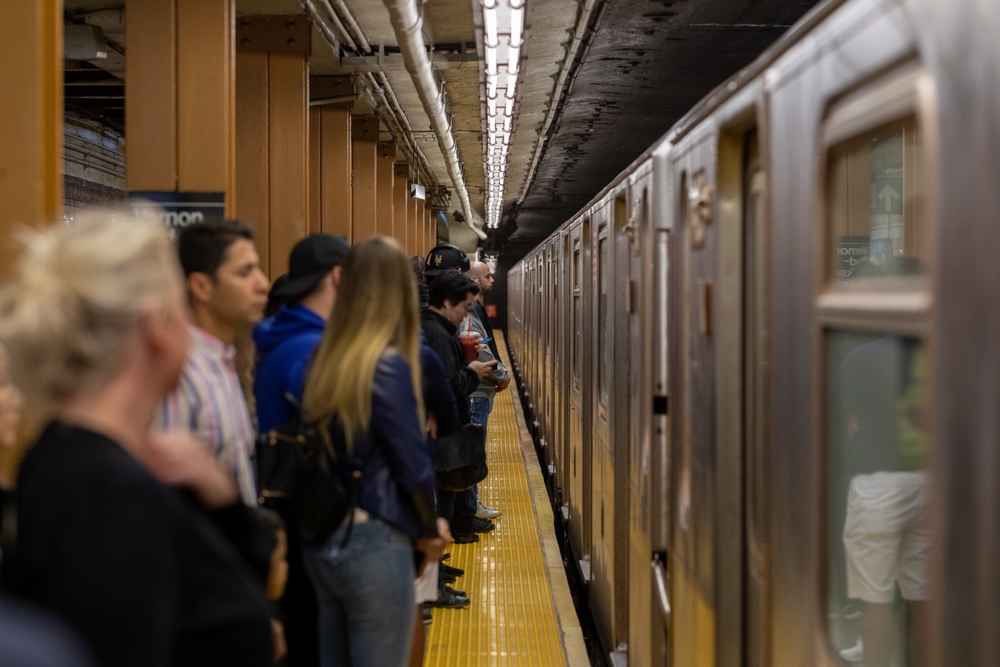
At 8:30 in the morning, on a New York metro dock, the train stops and the doors open. Who is inside tries to get down, but there is a compact front of people already ready to climb. For a few seconds no one moves: who has to leave is stuck, who wants to enter tries to make room. Then the pushes begin, the incarstries, improvised trajectories. It is a dynamic that is repeated dozens of times every day, especially in the busiest stations.
Despite this, there is an implied rule – let go before climbing – which is also repeated by the automatic announcements of the Metropolitan Transportation Authority (MTA) and by the awareness campaigns, but is systematically unexpected, especially in the most congested nodes of the network.
In this regard, in recent days we began to talk about a regulatory proposal of MTA that would introduce a sanction for those who hinder the exit of passengers. The measure would seek to improve the “passenger flow”, with fines of 25 dollars for those who try to climb on board before the outgoing flow is completed. The goal is to reduce the so-called “dwell time”, that is the stop time at the station, which is also an important indicator to measure the efficiency of the service: even a few seconds saved per stop, on high frequency lines, can affect the overall regularity.
Respect for the rule would be entrusted to a dedicated task force – the “Passenger Flow Compliance Task Force” – consisting of bourgeois agents located in strategic stations – Grand Central Terminal, Times Square, Atlantic Avenue–Barclays Center station. In these snodes, among the busiest in the network, the behaviour of the passengers directly affects the ability of the line to maintain regular hours, especially in the peak bands of the morning and evening.
Several urban transport studies show that the organization of uphill and downstream flows is one of the most important factors for the commercial speed of metropolitan systems. Some cities, such as Tokyo or London, have introduced signs to the ground and station staff to direct passengers and reduce traffic jams to the doors. In New York the network exceeds 470 stations and transports millions of users daily, and even seemingly minimal individual behaviors can generate chain effects on service.
Unfortunately, however, the proposal does not exist. The news was circulated on 1 April and was simply an April fish: no new regulations were announced, nor is the introduction of fines for the behaviour in the uphill phase. The problem that the false news intercepts, however, is real and many social users had welcomed the norm positively. And who knows it doesn’t make a signal for the future.
L’articolo The idea to fine those who block the metro doors in New York proviene da IlNewyorkese.