



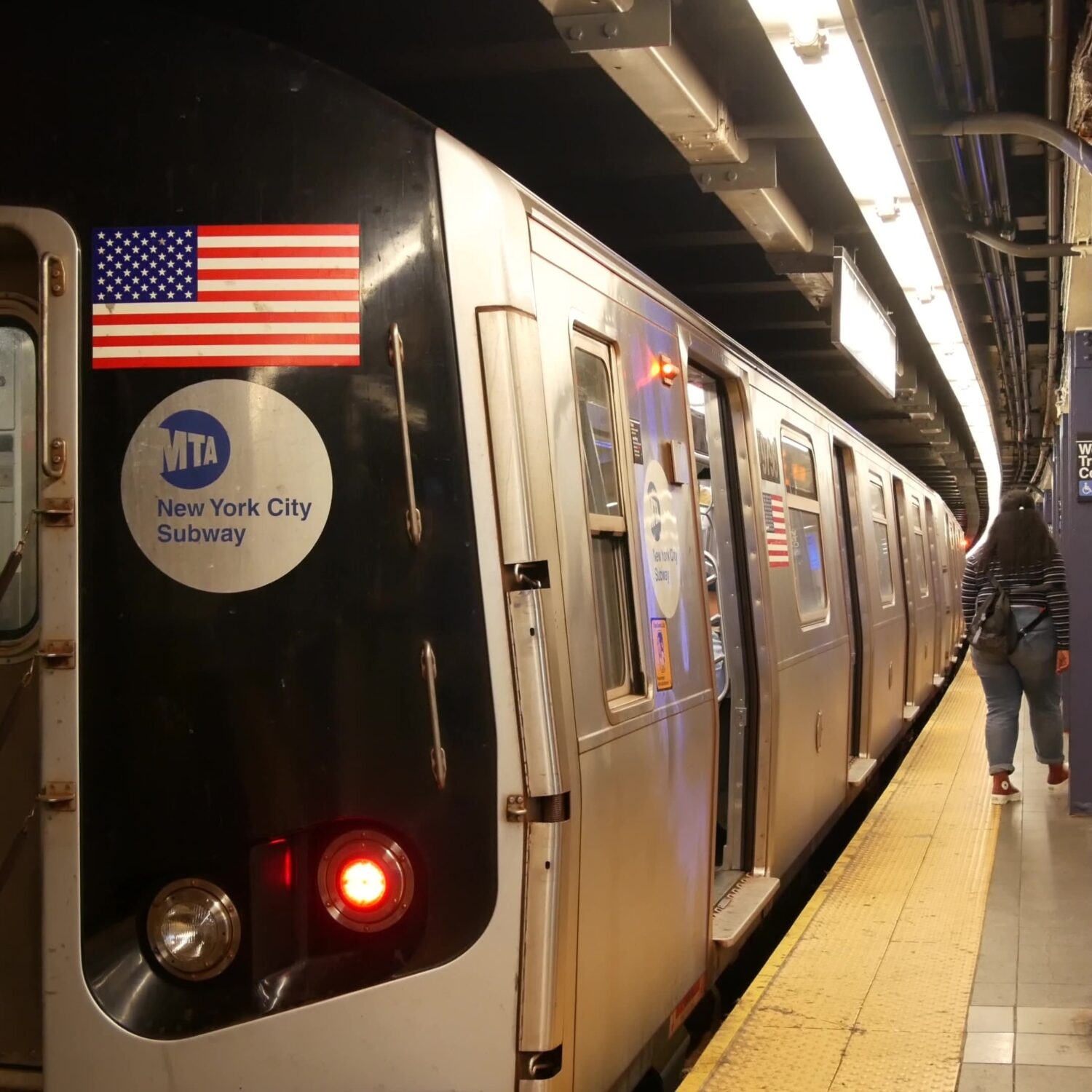
In summer some New York metro stations can be considerably warmer than the road. In 2025, according to data from the city, the average temperature in the hottest moments of the summer reached 96 degrees Fahrenheit, about 36 degrees Celsius. In some parts of the network the difference from outside can reach 20 degrees Fahrenheit, just over 11 degrees Celsius.
It is from one of Chambers Street counters, in Lower Manhattan, that yesterday, Monday, August 10, Mayor Zohran Mamdani and the Metropolitan Transportation Authority leadership announced an innovative feasibility study to address the problem. The city and the MTA want to understand whether at least one part of the heat accumulated in the metro system can be removed from the docks and used elsewhere. To do so, they have established and announced a feasibility study to build an underground thermal network in the complex formed by the Brooklyn Bridge-City Hall and Chambers Street stations, in Lower Manhattan.
The choice of the location of the presentation to the press of the project is also linked to another intervention. Chambers Street, the station of the lines J and Z, inaugurated in 1913 and long known for its deteriorated structures, is about to be subjected to an important total requalification. Ceilings and infiltrations will be repaired, rebuilt parts of the stairs and doors, installed new lighting systems and security cameras and restored original elements such as tiles, mosaics, terracotta decorations and marble bases.
MTA has confirmed that these works will be funded with congestion pricing revenues, the toll system introduced in January 2025 for most vehicles entering the Manhattan part south of 60th Street. The program serves to reduce traffic in the busiest area of the city and, at the same time, to collect resources for public transport. The law provides that revenues allow to finance 15 billion dollars of investments in the MTA network.
Chambers Street’s redevelopment also offers an opportunity to experiment with the new technology without intervention only on the spaces used daily by passengers. In fact, the project aims to exploit an old unused central platform of the station to build part of the infrastructure necessary for the thermal network.
The idea is relatively simple to explain, even if more complex to accomplish. A radiant cooling system should absorb a part of the heat present on the docks through cold water that circulates inside panels, pipes in floors or other surfaces. Unlike a normal air conditioning system, the system cools the surfaces, which in turn absorb heat from the environment. According to the city, this technology can consume from 25 to 35 percent less energy than traditional air conditioning.
The heat collected would not simply be dispersed. The project plans to transfer it through pipes to a series of geothermal wells dug under the unused Chambers Street platform. The wells could reach a depth between 500 and 600 feet, that is about 150-180 meters, and allow to store thermal energy in the ground. In winter the process could be reversed and the recovered heat used to help warm up some public buildings in the area, including the David Dinkins Municipal Building, Tweed Courthouse, Surrogate’s Court and City Hall.
The principle of the so-called Thermal Energy Networks is not new. Systems of this type are already used to transfer thermal energy between buildings and underground. In New York there are, for example, St. Patrick’s Cathedral and New York Botanical Garden. The novelty would apply technology to the subway: according to MTA it has never been tested before in a public transport system in the United States.
Part of the heat at the stations is produced by the metro itself. The air conditioners of the wagons cool the inside of the trains but they discharge hot air in the tunnels and on the docks; then they add motors, brakes, electrical equipment and the heat accumulated by the underground structures. Refreshing an old station with normal air conditioners is also particularly difficult because the subway environments are not closed: stairs, entrances and ventilation systems maintain a continuous air exchange with the outside.
The feasibility study will cost 800 thousand dollars and will have to establish how effectively the system would reduce temperatures, how much heat could be recovered and if energy saving would justify the investment. If the results are positive, the design phase could start in 2027.
It’s not even the first time MTA is looking for a hot solution at stations. In 2025 he had already started a research on the technologies used in the deep stations of line 1 on 168th and 181rd Street, in Washington Heights, where some docks are located about 120 feet, over 36 meters, under the road level. In that case, the objective was to maintain summer temperatures between 82 and 85 degrees Fahrenheit, about 28-29 degrees Celsius.
The new study starts from the same problem but tries to solve it in a different way: instead of considering the heat of the metro only something to eliminate, try to understand if it can be preserved and reused a few months later. Before you know if it really happens, cities and MTA will have to determine whether to do it under Lower Manhattan is technically possible and, above all, it is worth the cost.
L’articolo New York wants to use the heat of the metro to heat the buildings proviene da IlNewyorkese.