



To understand what happened in the last days in New York you need two numbers: 960 thousand and 17 thousand. The first indicates the properties appeared in a new public register linked to the tax on second luxury houses; the second corresponds to the letters sent by the Municipality to the owners who may have to pay it.
The distance between the two numbers has transformed the tax start in a political case. Thousands of people have searched their names in the lists, finding houses that are worth much less than the thresholds envisaged or that are permanently occupied by the owners. Some interpreted the inclusion as confirming a new debt with the Municipality, although the register included a much larger amount of real estate.
The procedure began on Thursday, July 23, when mayor Zohran Mamdani announced on social media the sending of the first letters with the phrase “You’ve got mail”. The next day the Department of Finance had published an additional register of real estate values, with names of headers, addresses and tax assessments. The document will remain open until the end of the year and includes almost all houses from one to three families, many condoms and buildings organized as cooperatives.
If you have a second home in New York City worth more than $5M, check your mailbox when you’re back in the five boroughs — because you’ve got mail.Today, we sent notification letters to property owners, letting them know that our new pied-à-terre tax coming is soon.The best..
— Mayor Zohran Kwame Mamdani (@NYCMayor) July 23, 2026
Comparison in the register does not mean being subject to the tax. The Department of Finance itself has specified that the list “includes, without limiting itself to them”, the properties that could fall into the supertax. According to an analysis of the New York Times, only about 24 thousand properties exceed the expected economic thresholds. The municipality then restricted the first control to 17 thousand cases, sending as many letters.
The tax, commonly referred to as pied-à-terre tax, entered into force on 1 July and was approved at the end of May in the budget of the State of New York. The idea circulated in Albany since 2014 and returned to the centre of the debate in 2019, without obtaining the necessary support. Governor Kathy Hochul re-proposed this spring to help cover the deficit of the Municipality, with the support of Mamdani.
The surcharge applies to expensive properties that are not the main residence of the owner, a narrow family or a tenant. For the first two years it applies to houses from one to three families evaluated by the Municipality at least $5 million, with rates between 0.8 and 1.3%. For apartments in condominium and cooperatives the initial tax threshold is one million dollars and the rates range from 4 to 6.5 percent. Once the threshold is exceeded, the percentage is calculated on the entire value attributed to the property and not only on the surplus part. The first sums due will appear on the real estate bills expiring on January 1, 2027. The complete rules and bands were published by the Department of Finance.
The differences between houses, condoms and cooperatives depend on the system with which New York calculates the value of properties. For a state rule, condominians and cooperatives must be evaluated as if they were rented buildings, using as reference the yields of comparable buildings. The value obtained can be much lower than the price to which an apartment would be sold.
A report by the Committee on the Reform of Real Estate Tax cited the case of the overtax bought in 2019 by financier Ken Griffin for $238 million: for the city tax was worth just over 9 million. The provisional limit of one million per condominians and cooperatives therefore serves to identify apartments which, according to the legislators, could be at least five on the market. The correspondence is however very approximate and varies from building to building.
Since July 2028 the Department of Finance should move to a method based on sales of comparable properties. The threshold would become $5 million for all categories and rates would be uniform to those applied to houses by one to three families. Until then the tax will depend on tax assessments that only indirectly describe the commercial value of the apartments.
The identification of the main residence has also produced several errors. The municipality can obtain this information from tax returns and tax concessions, but the connection becomes less evident when a home is registered with a trust, a company or an LLC. Finance Commissioner Richard Lee said that these forms of ownership, together with unregistered records, explain many of the letters sent to stable residents.
Among the people who appeared on the list is Gale Brewer, a municipal councilman of the Upper West Side, who has lived in the same brownstone since 1994 and says he does not own other houses. Brewer had argued for the introduction of the tax, but criticized the way the municipality presented it and asked for a more accurate initial selection.
Only those who have received a letter must submit the documentation. The deadline is August 21 for houses and condominians and August 24 for cooperatives. To prove the main residence you can use the latest tax return or a combination of documents, including license, electoral card and evidence of the actual occupancy of the house. In the case of trusts and companies also serve acts that allow to identify beneficiaries or majority owners. The final rules give thirty days from the Commune communication to contest the first evaluation.
The administration has assigned thirteen new employees to the Department of Finance and eleven to the office that manages tax claims. He also formed some 311 operators and created a portal to present documents. Mamdani said that the work of verification will serve to make sure that from next year they pay only the owners of second houses that exceed the expected thresholds.
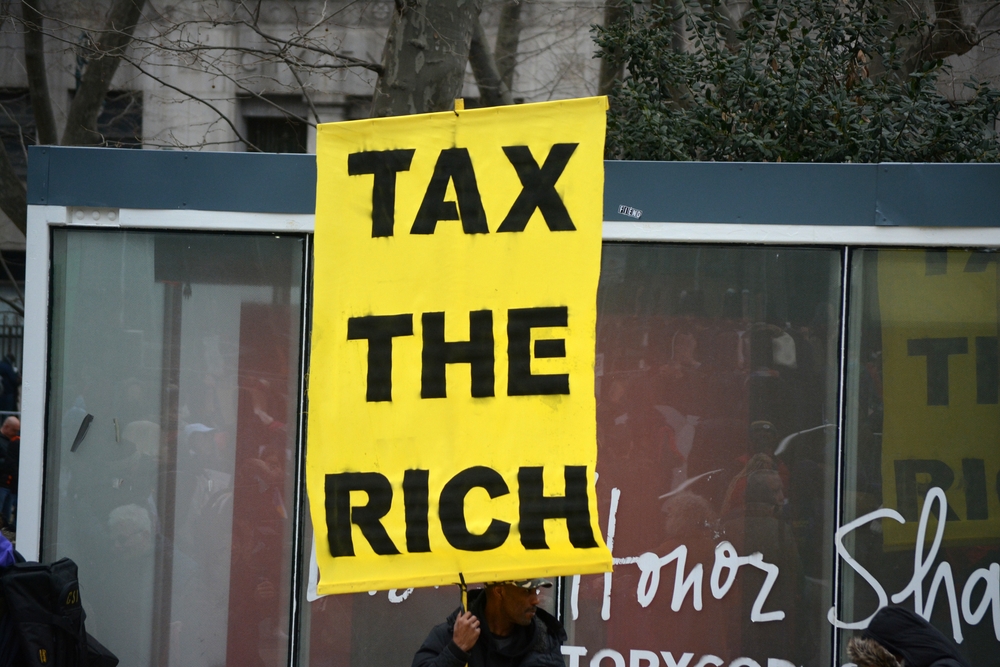
Hochul defended the publication of the register, recalling that names, addresses and real estate debts have long been public information. His office, however, has given the Municipality responsibility for the way the procedure has been communicated and applied. The distinction became relevant because Mamdani had presented the sending of letters as a stage of his campaign to “tax the rich”, giving greater visibility to a register that is normally published without particular announcements.
The city plans to cash around $500 million a year. Before the law passed, the Comptroller’s office Mark Levine had calculated that a tax of this type could reach that figure by involving just over 11,000 properties. The same study, however, reduced the estimate to a figure between 340 and 380 million considering the rented apartments, changes in residence and possible sales decided to avoid the surcharge.
L’articolo The confused departure of the new tax on second luxury houses in New York proviene da IlNewyorkese.