


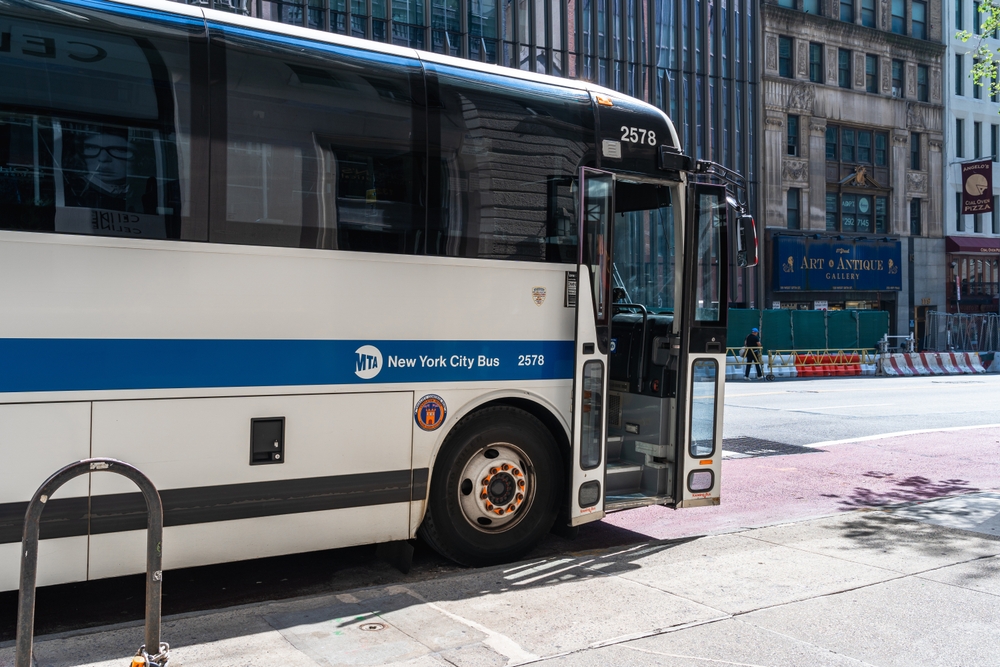
A New York promise of free buses for everyone, one of the most important proposals of the mayor Zohran Mamdani’s election program, is still far from being realized. Meanwhile, the City Council is trying to move the discussion, seeking instead a balance between the promise and the possibilities deriving from the municipal budget, with a more limited measure: making public transport free for low-income New Yorkers, starting from a program that already exists but which today only reaches a part of the people to which it would be destined.
The program is called Fair Fares and started in 2019. It allows residents between 18 and 64 years with an income of up to 150 percent of the federal poverty threshold to pay half the price by metro, bus and paratransit. Basically it means $1.50 a ride instead of the full rate. Citizenship is not a requirement. According to the Citizens Budget Commission, in March 2026 fewer than 380 thousand people were enrolled, about 31 percent of the eligible. The cost for the city, in the fiscal year 2025, was $83.6 million, including administrative expenses.
The problem, according to municipal councilmen and public transport associations, is that the program is too difficult to use just for many of the people who should help. Questions require bureaucratic passages and documents that can discourage those who would be entitled to a discount. For this reason the speaker of the City Council, Julie Menin, supports a revision of the program that previews the automatic registration of the residents already identifiable as suitable and, for the poorest part, the full free of metro and bus. During a press conference at City Hall, he said that many people are giving up other essential expenses to move around the city.
Julie Menin
Mamdani presented free buses as a universal public service, comparable to libraries, and as a way to speed up a network of buses that remains among the slowest in the United States. But the plan would cost much higher than Fair Fares’ expansion: some estimates speak of hundreds of millions of dollars a year, up to about a billion. It would also depend on the relationship with the state of New York and with the Metropolitan Transportation Authority, the state agency that manages metro and bus and that in recent months has insisted a lot on the contrast to tariff evasion.
However, there are several proposals around Fair Fares: the Citizens Budget Commission, which is skeptical on free buses for everyone, proposes to raise the access threshold to 250 percent of federal poverty. In this way they would also return to the program alone people with income up to about 39,900 dollars a year and families of four people up to about 82,500 dollars. The Community Service Society of New York asks instead to reach 300 percent, claiming that the current limit leaves out many workers who earn little more than the threshold but not enough to sustain without difficulty the cost of daily travel. According to a 2024 report, about one out of five New Yorkers has difficulty paying public transport.
The difference between the two roads is mainly political and budgetary. Free buses for all speak of universalism: no income verification, no question, no distinction between who can afford the ticket and who not. The expansion of Fair Fares, on the other hand, accepts that distinction and tries to use public money better, focusing on people for which even $2.90 per ride can weigh on the family budget. It is a less spendable solution, but easier to finance and approve.
The article Where are we with free buses in New York? It’s from IlNewyorkese.