


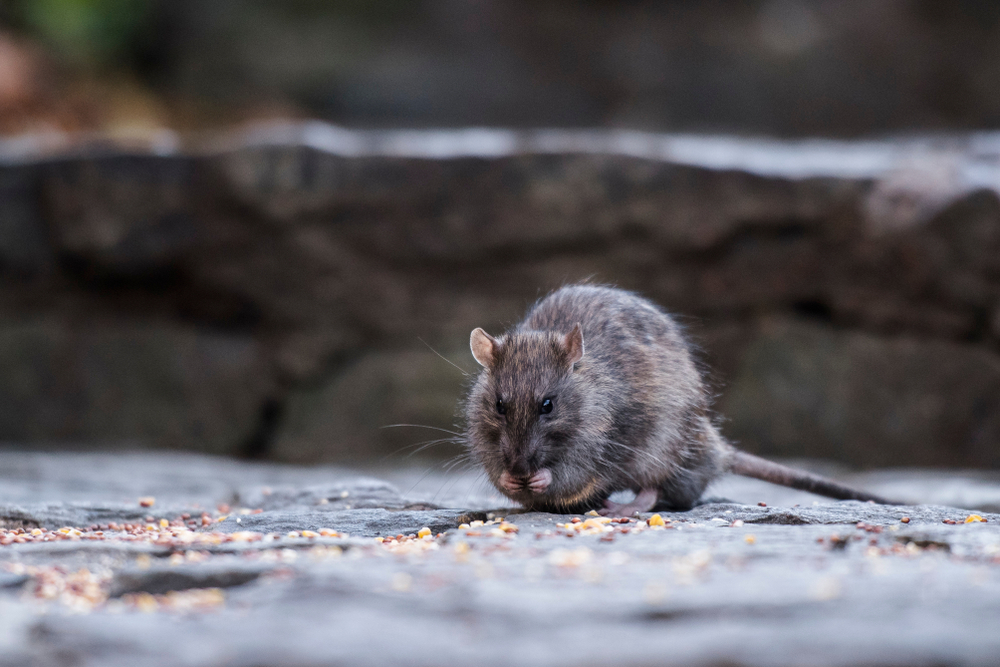
New York has long had a problem with rats, and in recent years has tried to deal with it especially by intervening on the garbage. The city appointed a rodent containment manager, changed the rules for waste exposure and imposed the use of more rigid bins to reduce food available on the sidewalks. They are very targeted measures, because rats live where they find leftovers, open bags and spaces in which to move – and New York is full of all this. A new study told by National Geographic suggests that, in order to better understand where and when they increase, it could be useful to look at a less intuitive place: the East River.
A group of researchers led by Mark Stoeckle, an environmental geneticist at Rockefeller University, took water samples from the river for a year using quite common objects, starting with a plastic bucket bought in Ferrara. The goal was to search for traces of eDNA, i.e. environmental DNA. It is the genetic material that animals continuously leave in the environment through skin, hair, mucus, feces and other biological residues. You do not need to find an animal directly to know that it has passed somewhere: you just need to find the traces you left.
In the case of East River, these tracks also come from the city. When it rains a lot, a part of what accumulates on the streets ends in the water streams, bringing with it biological fragments from the surrounding neighborhoods. For researchers, therefore, the water of the river becomes a kind of mobile archive of animal life in the city. In the samples, 71 species of fish have been identified, but also genetic signals that can be traced to animals living on the mainland, including squirrels, raccoons, chastes and especially rats.
The constant presence of rat DNA in the water is the most interesting point for city management. According to researchers, observing changes in the amount of eDNA could help to understand if in a certain area the population of rodents is increasing. It would not be a solution to the problem, and would not replace interventions such as waste management or disinfestation. However, it could become an additional tool: an indirect monitoring form, useful to identify infestation signals first and intervene when the problem is still contained.
The same method also showed more. In the water, genetic traces of cows, pigs and chickens were found, probably linked to waste water and food residues of the city. Comparing those proportions with data on meat consumption in the United States, researchers observed a very close correspondence. It is a curious detail, but it helps to better understand what the eDNA is: a set of small clues that, put in line, tell how a city works.
L’articolo To monitor rats the East River comes from IlNewyorkese.