


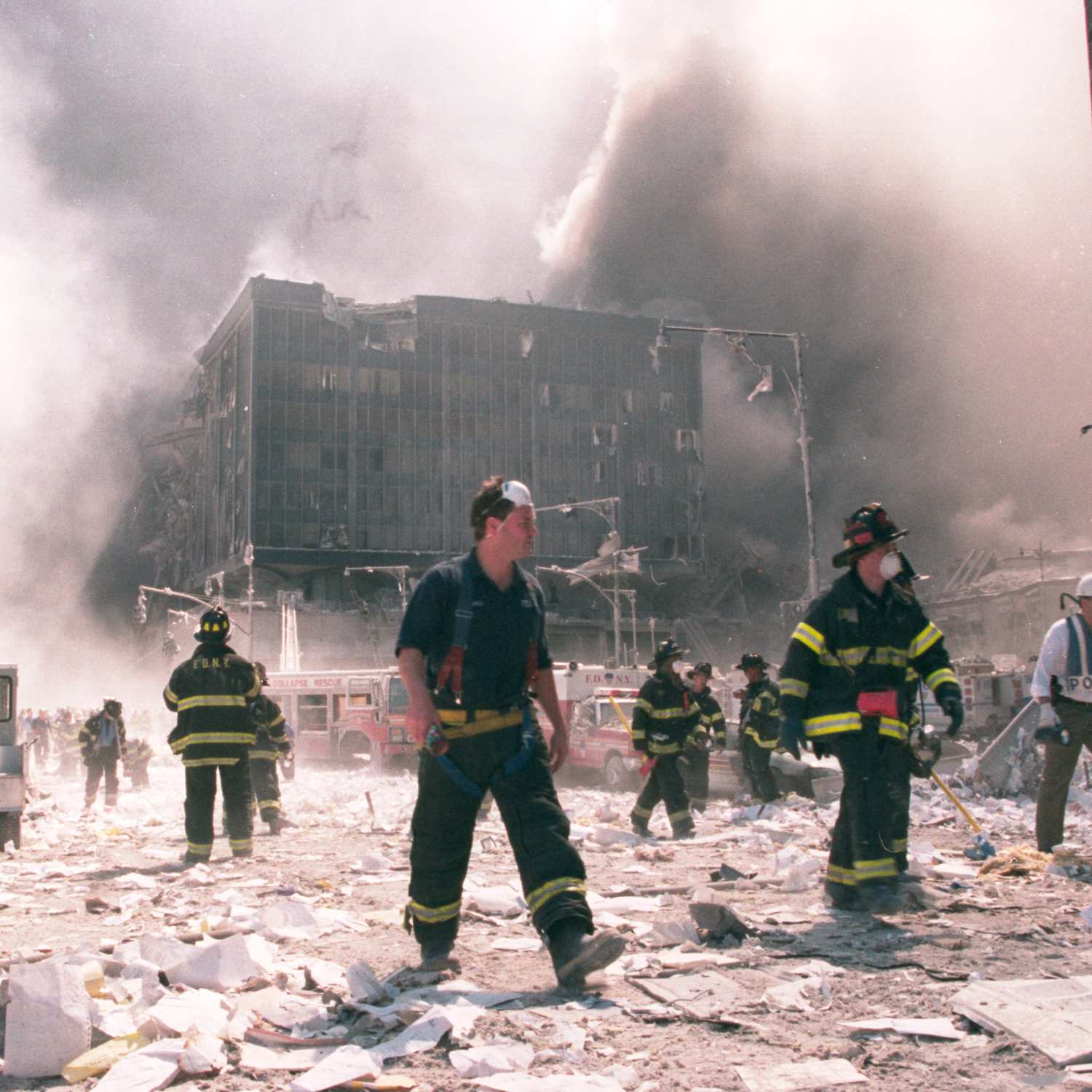
Almost 25 years after the September 11 attacks, yesterday, Tuesday, September 8, the city of New York published more than 170 thousand pages of air quality documents around Ground Zero, health risks and information circulating within the administration in the months following the collapse of the Twin Towers.
It is the conclusion, at least partial, of a story that New York had told on August 13th, when the city and 9/11 Health Watch were negotiating an agreement after years of causes to get the acts. 68 boxes of documents of the Department of Environmental Protection had already emerged that the agency had not identified during the first research, while the Municipality had allocated $34.2 million to create a public portal. However, a definitive agreement had not yet been reached and it was not known when the archive would become accessible.
Now the portal with documents on September 11 is online. The city has published a first collection of about 170 thousand pages from different agencies and has announced that other documents will be added in the next twelve months. The agreement reached by the administration of Mayor Zohran Mamdani with 9/11 Health Watch also puts an end to two judicial proceedings on access to acts.
For years the organization has been trying to reconstruct what information the city had on toxic substances in the Lower Manhattan air, when it had obtained them and what decisions had been made while residents and workers gradually returned to the area.
The newly published papers do not provide a definitive and complete answer to these questions, but allow for the first time to consult together a large amount of documents that had so far been difficult to access. Among these is the so-called Harding Memo, a memorandum of October 2001 addressed to the then deputy mayor Robert Harding, in which the possible legal responsibilities of the city related to environmental and working conditions after the attacks were examined.
The document also considered the possibility that some people returned too early in Lower Manhattan, exposing themselves to substances present in the air and in the rubble.
Another memo, dating back to February 2002, reported the concerns expressed by the then New York Congressman Jerrold Nadler on the presence of asbestos in the buildings of the area. According to the reconstruction of NY1, an advisor to the Bloomberg administration wrote that, if Nadler’s concerns were founded and the city had not properly informed people about the risks present in Lower Manhattan, the municipality could face serious problems and numerous causes.
In a 2002 letter sent to FEMA, citizens’ officials also wrote that samples collected during inspections indicated the possible presence of asbestos in part of the debris and acknowledged that prolonged exposure to high levels of asbestos in the air could cause health problems.
The documents show that there were concerns about possible health risks and their legal consequences within the administration. To establish precisely what individual officials knew, at which time and how much information they affected public communications, however, will require a more detailed examination of the thousands of pages just made available.
Among the material published there are also the 68 boxes of documents of the Department of Environmental Protection which played a central role in the litigation told by New York in August. They had been requested through the Freedom of Information Law, but initially the DEP had claimed that they did not find relevant documents. Only then had the existence of the material emerged, for a total estimated then in about 340 thousand pages.
The story came before the New York Supreme Court. On 28 May, Judge James Clynes had established that the DEP had acted “arbitrary and capricious” in rejecting the administrative appeal of 9/11 Health Watch, because the motivations provided by the agency were generic and not accompanied by a specific assessment of the research carried out.
The court therefore authorized the interrogation under oath of DEP officials. During a deposition of 1 July, Russell Pecunies, the official who had rejected the appeal for access to the documents in 2024, had said that he had made that decision on indication of the FOIL unit manager, without personally carrying out further checks.
The new publication closes the two litigations with 9/11 Health Watch, but does not finish the reconstruction work. The New York City Department of Investigation is conducting a separate investigation to determine what information on toxic substances produced by the attacks were in possession of the different municipal administrations and what decisions were made on the basis of that information. The city has allocated $3.81 million between 2026 and 2027 to support the DOI an investigative company with expertise in the field of public health. A report must be published at the end of the survey.
The newly opened archive will also have a practical function. The administration has announced that dedicated employees will be identified at the Department of Citywide Administrative Services and NYC Public Schools to help former workers and other people recover documents that can prove their presence in the New York City Exposure Zone.
This documentation can be necessary to access federal programs for people who have suffered health consequences related to attacks, including the World Trade Center Health Program and the September 11th Victim Compensation Fund.
The new portal is designed to allow research within documents. In the first publication were included in particular materials identified using keywords requested over the years by associations, including “asbestos” and “cancer”. Personal information and data that could still create security issues for Lower Manhattan buildings have been excluded or obscured.
The 170,000 pages available this week are only a first part of the archive. Others will be examined and published progressively over the next year.
The article New York published 170 thousand pages on the toxic air after September 11 comes from IlNewyorkese.