



On Saturday, November 14, thousands of New York students showed up at the examination offices to take the test that could determine in which high school to study in the next four years. Many of them, however, returned home without completing it. A computer problem has in fact interrupted the Specialized High Schools Admissions Test (SHSAT), proof that regulates access to eight of the nine specialized public schools in the city, including some of the most prestigious institutions in the United States. According to the New York Post, the malfunction involved about 2,500 students, although the Department of Education has not yet officially confirmed the number.
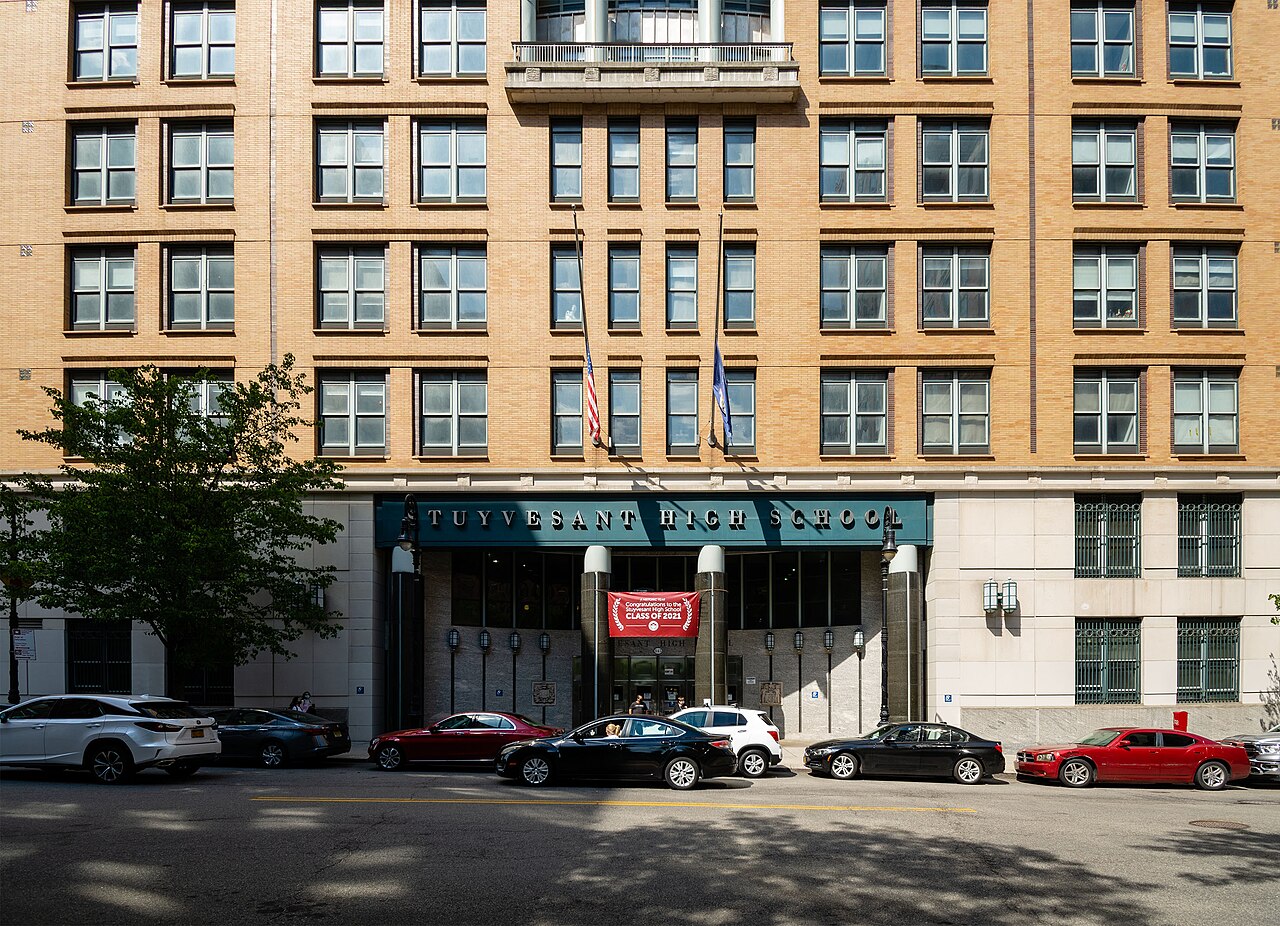
The problem occurred on the digital platform managed by Pearson, the company responsible for developing and administering the exam. In some locations, including the Brooklyn Technical High School and Stuyvesant High School, students failed to access the system; in others, those who had already started answering questions were forced to stop. The school authorities therefore suspended the evidence and arranged for the return of the participants. The head of city public schools, Kamar Samuels, announced an investigation into the operation of the platform, while Pearson assured that he had solved the problem. The sessions scheduled for Sunday, November 15 were held regularly. Students involved in the interruption will automatically receive a new date, which should be communicated by Friday 20 November. Even those who have completed the test, but believes that the technical problems have compromised their result, can ask to repeat it.
To understand why the incident has caused so many protests, it is necessary to consider how admission to specialized high schools works. These are nine public high schools, therefore free of charge, offering particularly challenging courses in fields such as mathematics, science, technology and artistic disciplines. Eight of these select students through SHSAT, while Fiorello H. LaGuardia High School, specialized in the arts, uses auditions and evaluations of the school path. The others include Stuyvesant High School in Manhattan, the Bronx High School of Science and the Brooklyn Technical High School, known for their academic programs and selectivity of admissions.
The peculiarity of the system is that, for the eight schools using SHSAT, the result of the examination is the only ordinary criterion of selection. No votes obtained in previous years, letters of recommendation or extracurricular activities are considered. Students living in New York City who attend the eighth school year, which corresponds roughly to the third Italian average, and those who attend for the first time the ninth. At the time of registration, each candidate indicates the schools he prefers, in order of priority. Once the tests are correct, the students are sorted according to the score: who gets the best results has the precedence in the assignment of the available places. If a school has exhausted the places, the candidate is considered for the next one in his list. There is also a summer program, called Discovery, which offers a possibility of admission to certain disadvantaged students with scores below the ordinary threshold.
The competition to access these schools has always been remarkable. In the last cycle of admissions concluded, that for the school year 2026-2027, supported the SHSAT 26.123 students of eighth class and only 4.023 received a direct admission offer: about 15 percent of participants. For many families the preparation begins months before the exam, through exercises, manuals and, when possible, private courses. The result does not necessarily determine the possibility of attending a good high school, because New York also has other selective public institutions, but those provided in SHSAT are the most requested schools.
The malfunction has arrived just during the first year of use of the new adaptive version of SHSAT. In 2025 the test had already passed from paper to computer, but since 2026 an adaptive system has been introduced that changes the difficulty of the questions on the basis of previous answers. A student who correctly answers a question can receive a more complex one, while a wrong answer can be followed by a simpler question. The test continues to evaluate linguistic and mathematical skills and normally lasts three hours, but students can no longer freely return to previous questions after having exceeded them. The Department of Education presented digitization as a way to modernize evaluations and make accessibility tools available, including multilingual glossaries and support functions for students with disabilities.
The incident also brought attention to the criticisms that have been accompanied by SHSAT for years. According to data released in July 2026 by the Department of Education and analyzed by Chalkbeat, black students went just 3.5 percent of admission offers, while Latin American students received 6.5 percent. Yet, among the participants in the exam, the two groups represented approximately 17 and 25 percent respectively. At Stuyvesant High School, on 777 overall offers, only three went to black students. System critics argue that a selection based on a single test will end up encouraging those who have more opportunities to prepare. The test supporters, on the contrary, believe that an equal criterion for all is more transparent than the evaluations based on bulletins, interviews or recommendations.
This is why we have often talked about changing the test regulations. A 1971 New York State law protects the selection system through an examination for Stuyvesant, Bronx Science and Brooklyn Tech. In September 2026, two members of the municipal council, Nantasha Williams and Lincoln Restler, proposed to amend the admission criteria of the five other specialized schools, introducing also individual grades, recommendations and evaluations. The proposal stems from the poor representation of black and Latin American students and the difficulties encountered so far in reforming the system. For the moment, however, the rules do not change and the Department of Education has ensured that supporting the test on a new date will not result in penalties in the score or assignment of places.
L’articolo In New York City has blocked the exam to enter the most selective public schools proviene da IlNewyorkese.