


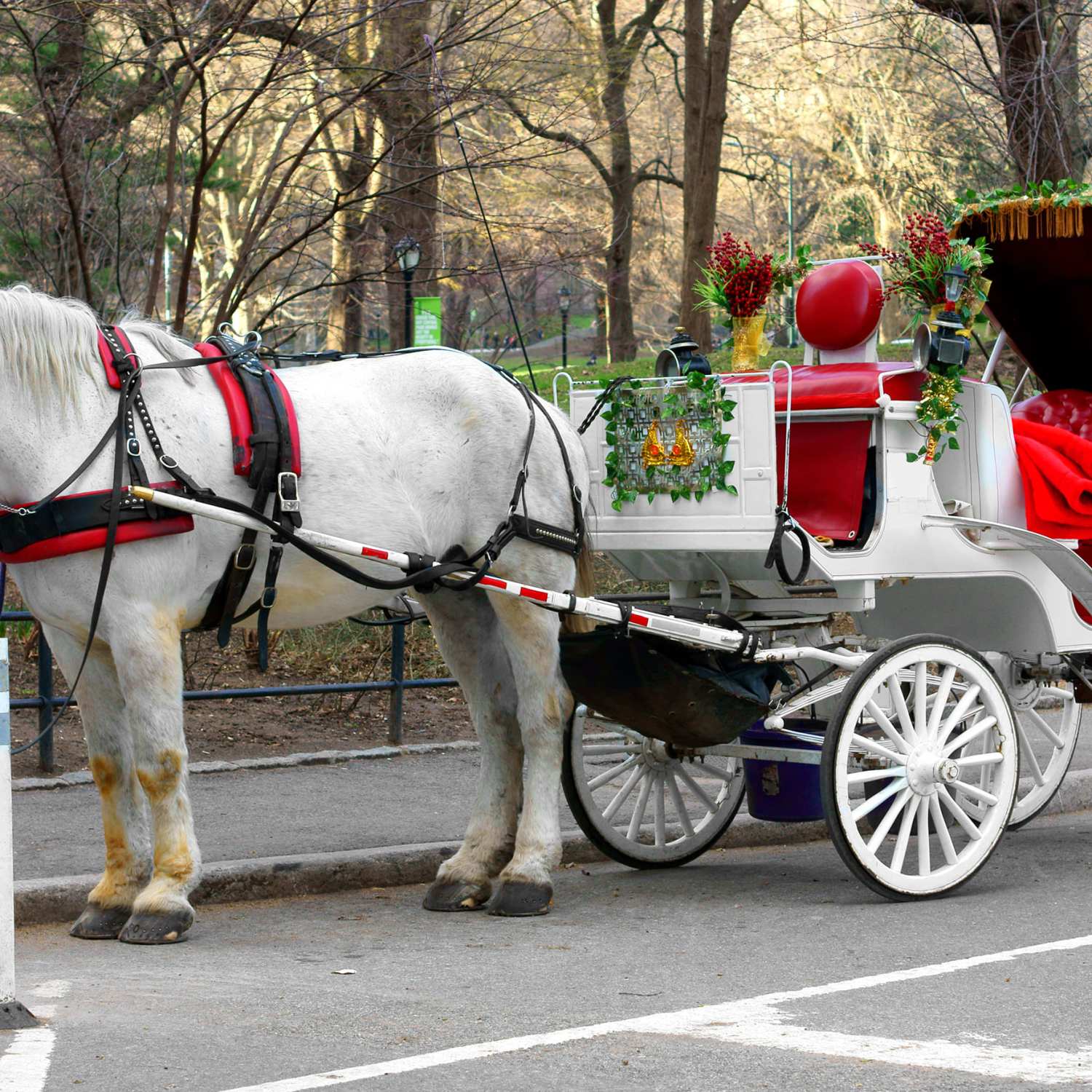
Horse-drawn carriages, one of Central Park’s best known tourist attractions, could disappear permanently from New York. On Tuesday, October 13, Mayor Zohran Mamdani and the President of the City Council, Julie Menin, announced their support for a bill that plans to ban the service from 1 June 2028. The measure will be submitted to the Council vote on 22 October and has already collected the signatures of 29 advisors out of 51, a sufficient number for approval if all will confirm their support.
The proposal, called Romanch’s Law, takes its name from Romanch Mahajan, an 18-year-old Indian tourist who died on June 17 after falling from a carriage whose horse had become uncompromised within the park. A week earlier, in Central Park, another horse used for the tourist service had died after blinding. The two episodes have reported in the middle of the debate a matter that has divided New York for decades: the safety of carriages and the conditions in which animals work.
The text of the bill, identified as Int. 0943-2026, provides for a gradual closure of the activity. If approved, the city will stop releasing new licences for carriages and drivers, while existing ones can only be renewed until the end of June 2028. The law also stipulates that the retired horses may not be sold or transferred for slaughter or intended for other commercial carriage transport activities.
The transition will also concern the workers. The Department of Consumer and Worker Protection, together with the municipal training and employment offices, will have to prepare a programme to help drivers and other industry employees find new employment. According to estimates from the local press, the activity involves about 200 drivers. However, the text does not provide an automatic economic compensation for those who lose their jobs.
This is one of the most controversial points of the Transport Workers Union, which represents drivers. President John Samuelsen criticised the agreement, claiming that the measures announced do not offer concrete economic guarantees to families who depend on the sector. In a statement by Gothamist, Samuelsen noted that the proposal merely indicates possible opportunities for professional conversion without direct economic support for workers.
On the contrary, the animal associations, which for years have asked to stop the use of horses for tourist transport. NYCLASS, one of the most active organizations in the campaign, considers the agreement the result of a long battle to subtract animals to traffic and working conditions in the city streets. The Central Park Conservancy, the organization that deals with the maintenance and management of the park, also expressed itself in favour of the ban.
The question had already had an important weight in town policy. In 2013 Bill de Blasio had promised to eliminate the carriages once he became mayor, but during his eight-year term he had failed to get an agreement to do so. Even his successor, Eric Adams, had faced the theme without reaching a ban. The comparison has always focused on the same aspects: the welfare of horses, the safety of pedestrians and visitors and the economic consequences for drivers.
The agreement announced on Tuesday changes above all the political perspectives of the proposal. Menin, who had already expressed his support for the law in July, set a date for the vote, while Mamdani confirmed the intention of the administration to accompany the closure of the sector. The mayor has assured that the Municipality will work to protect both animals and people who today depend economically on carriages.
The prohibition, however, has not yet entered into force. Up to the approval of the law and the conclusion of the transitional period, carriages will continue to operate according to current rules. If the City Council will confirm the announced support, from June 2028 one of the oldest tourist services in Manhattan will become part of the history of the city.
L’articolo New York wants to say goodbye to the carriages of Central Park proviene da IlNewyorkese.