


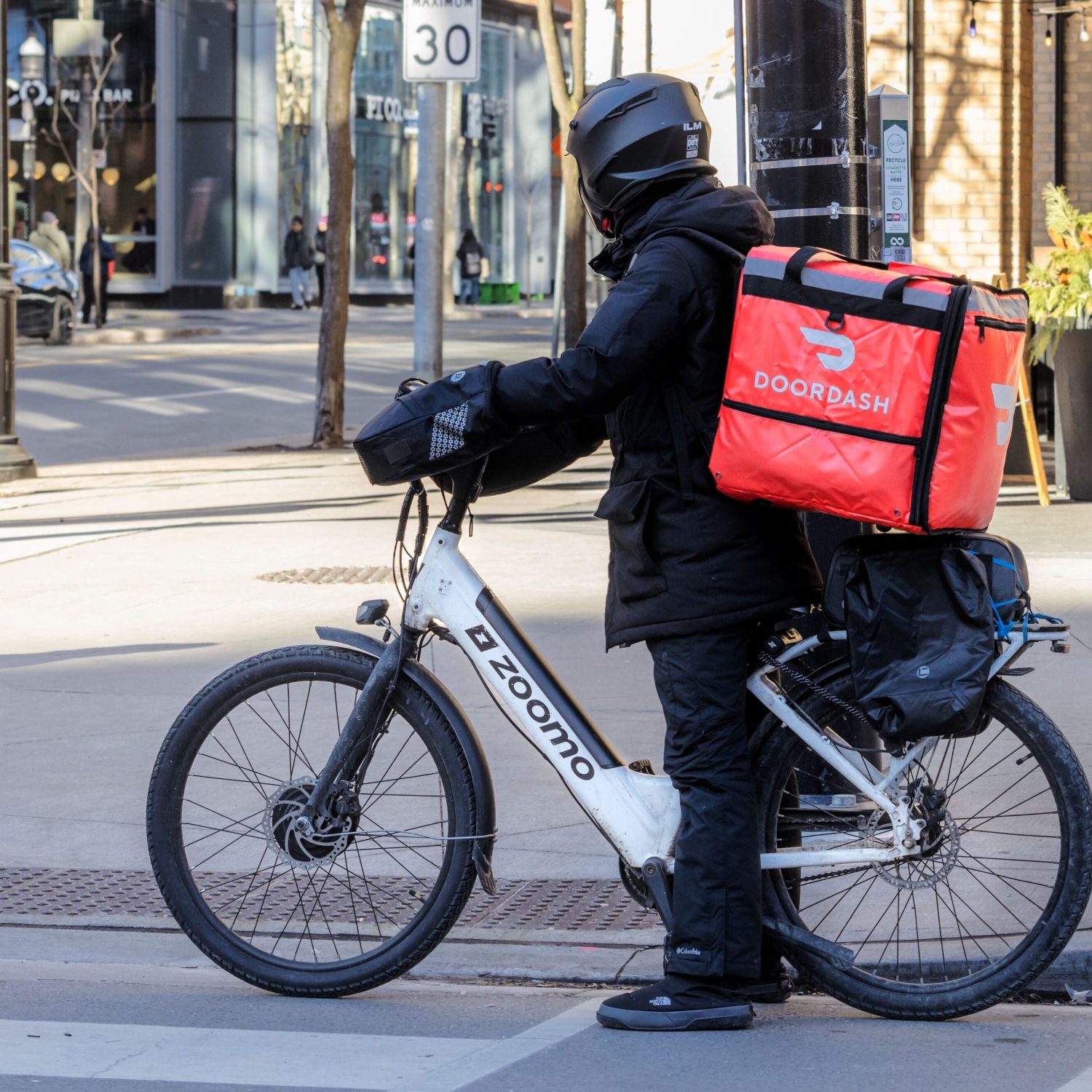
DoorDash will pay US$131.5 million to close an investigation of the city of New York which has ensured that for years hundreds of thousands of riders have been paid less than due, late or, in some cases, have not been paid at all. More than 115 million dollars will be distributed directly to workers and about 16.7 million will be paid as sanctions and other costs. The agreement covers more than 260 thousand people and is the largest ever achieved by the city in a process for violations of workers’ rights.
The survey was conducted by the Department of Consumer and Worker Protection, the municipal agency which, among other things, controls compliance with the rules on the work of riders. It began after dozens of workers had reported missing or late payments. From those complaints, the city has widened control over the entire system used by DoorDash to calculate compensation.
The size of the survey gives an idea of the problem. The DCWP has obtained data from the terabyte company and analyzed over 152 million transactions and 110 million hours of work. It has thus reconstructed not only what was actually paid to individual riders, but also what parts of their day DoorDash considered payable work.
It is above all on this second point that a substantial part of the agreement is concentrated.
In New York riders of delivery platforms must receive a minimum pay for the time spent working through the apps. The system distinguishes between the triple time, that is the period used materially for a delivery, and the on-call time, during which the worker is connected to the app and is available to receive an order.
The city claims that DoorDash has excluded from the calculation some portions of both. Among these were, for example, parts of cancelled deliveries and trips that crossed the administrative border of New York. The problem also concerned some grouped orders, in which it happens that a rider withdraws or delivers more orders during the same journey.
The issue has become particularly important since December 2023, when New York began applying the new minimum pay for delivery workers. Today the rate established by the city is 22,13 dollars per hour, excluding tips. According to the DCWP, DoorDash had adjusted its hourly rate, but it continued not to correctly count all the time it had to be paid.
It’s a less technical distinction than it looks. A rider can be connected to the app and available to work even when he is not physically carrying an order from a restaurant to a customer. If a part of that time is excluded from the count, the nominal fee may comply with the minimum required by law while the compensation actually received by the worker is lower.
DoorDash acknowledged that he made mistakes, although he did not share all the conclusions reached by the city.
“We screwed up, and our mistakes meant some NYC Dashers were underpaid or paid late” (i.e. “We were wrong and, due to our errors, some New York Dasher were paid less than due or late”), wrote the company in a note published yesterday, Tuesday, September 22, after the agreement.
The company argues that many of the problems in payments have been caused by computer bugs or particularly complicated situations to manage in the software, such as orders with multiple pick-up or delivery points, trips coming out of the city borders and deliveries cancelled or completed only partially.
According to the data provided by the company and reported by Reuters, approximately 12.3 million dollars of the agreement are directly concerned with missing or late compensation. A much larger share, higher than 83 million, instead, serves to close the dispute about how the working time was calculated for the purposes of the minimum wage.
The difference also helps to understand why the deal involves so many people: according to City Hall, about 27 thousand workers will receive more than a thousand dollars and about 4 thousand will exceed 5 thousand.
To receive the money you will not need to present a cause, a question or document the hours worked again. The city says it has already identified the beneficiaries through the data obtained by DoorDash.
At the end of October, Simpluris will send a personalized communication to the last email address used by riders with DoorDash. In the message will be indicated the amount of money and you can choose between electronic payment and check. Those who do not select a mode will receive a check at the last known postal address.
Compensation will not always be equal to the sum originally missing. For workers who were not paid, the compensation will be calculated by adding to the wage due to a compensation equal to twice that figure: those who have not received a thousand dollars that they had, for example, will receive three thousand.
The agreement does not only concern what has happened in recent years. For the next three DoorDash will have to provide detailed data on compensation, working time, tips and other elements used to verify compliance with city rules each month.
It will also have to change some parts of the software. The app may not offer a delivery to a New York rider if the time of the worker is not simultaneously recorded as a trip time or on-call time. It will also have to show clearer information about working time and compensation and change the calculation used for some multiple orders.
There is then a less usual element. Workers Justice Project and Workers Algorithm Observatory are developing a tool that will allow riders to record the information shown by their app and share it with the city. The DCWP can compare this data to those sent directly from DoorDash. The company, according to the agreement, cannot prevent workers from using the instrument or penalize them for doing so.
The goal is to control a system in which an increasing part of working conditions is not decided by a manager in an office, but by the software: the algorithm establishes which orders to show, how to group them and what time intervals to attribute to the different phases of delivery. To understand if a rider has been paid correctly, you must also check what the app has registered.
DoorDash is not the first deal of this kind in New York. In 2025, the company had agreed to pay almost $17 million after a separate investigation of the state’s Actor General, relating to an old system used between 2017 and 2019 that brought together a part of the customer’s tips in the guaranteed compensation to riders instead of adding it to the pay.
The new process is different, but both show how complicated it became to control the work of delivery platforms. It is not enough to determine how much an hour should be paid: it is also necessary to establish, and to be able to verify, what minutes the algorithm considers part of that hour.
L’articolo Paying too little (and late) riders cost a lot to DoorDash proviene da IlNewyorkese.