



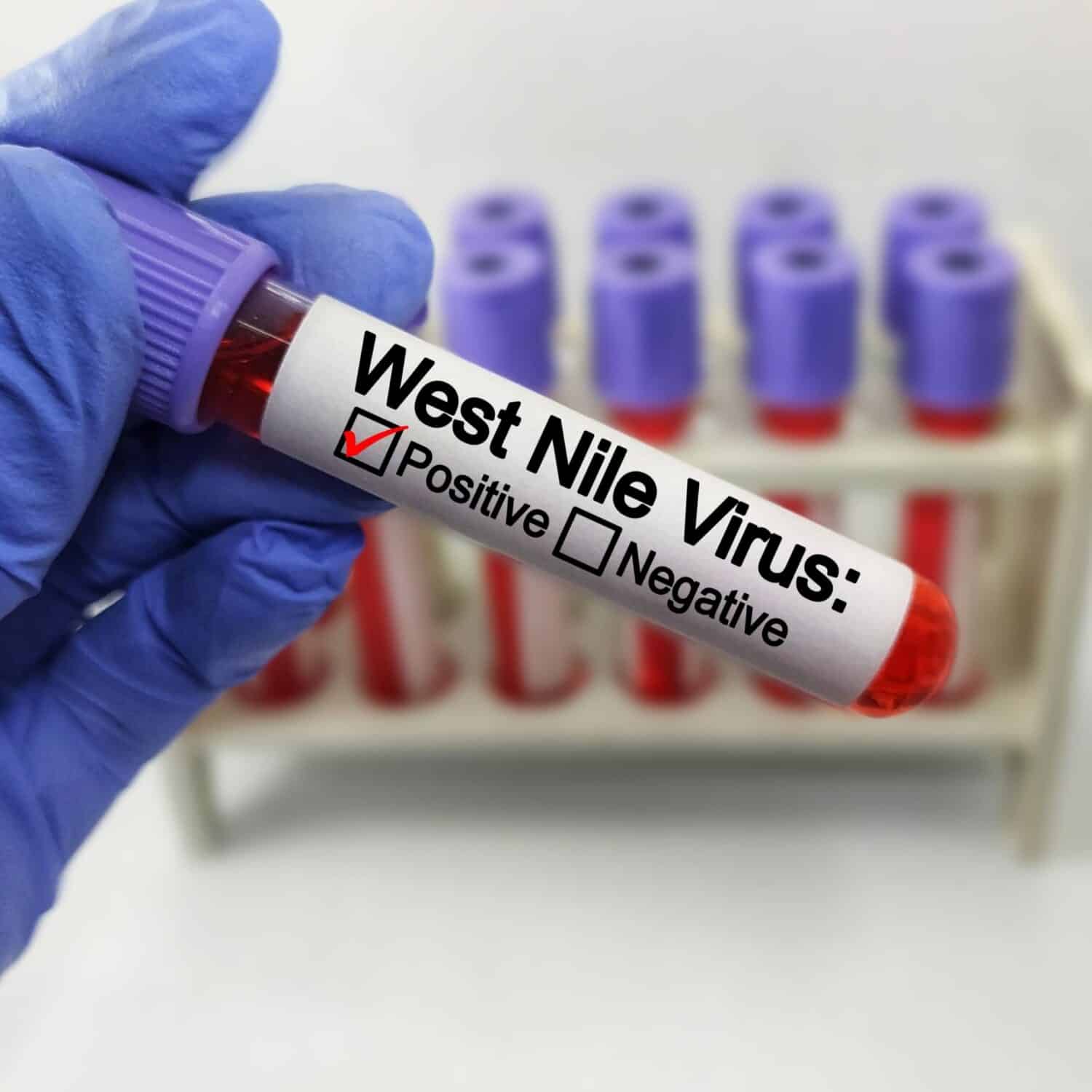
New York recorded the first human case of West Nile virus of 2026. The confirmation arrived on Wednesday, August 19 from the Department of Health of New York, at a time when the virus is circulating among the mosquitoes of the city much more than happened in the same period last year.
The updated data of the Department of Health attributes the case to a Manhattan resident and classifies it as West Nile neuroinvasive disease, the most severe form of the disease, which can cause encephalitis, meningitis or a strong muscle weakness.
The infected person lives in New York and spent time outdoors both in the city and in different locations outside the five boroughs. It is therefore not possible to determine where the infection occurred.
The contagion comes during the year when West Nile is normally more active in New York. Mosquitoes carrying the virus are found every summer between June and October and circulation tends to reach the maximum between August and September.
This year, however, the first signals arrived earlier and with a greater frequency. The first positive sample was found on June 16, while in 2025 the virus appeared in the tests only on July 1st.
The city’s surveillance system works through traps placed at different points of the five boroughs. The mosquitoes collected are gathered in groups, called pools, and analyzed to verify the presence of the West Nile. A single pool can contain up to 50 units.
According to the updated table of the Department of Health, in 2026 were positive results so far 1,284 mosquito pools: 504 in Queens, 354 in Staten Island, 252 in Brooklyn, 123 in the Bronx and 51 in Manhattan.
Since July the city has carried out eight targeted mosquito control operations in areas where positive pools were identified at the West Nile. According to the Department of Health, these interventions normally reduce by about 70 percent the amount of adult mosquitoes and by over 85 percent the pools that are positive to the virus.
Not all disinfestations are done the same way. The municipality mainly uses two systems.
In swamps, wetlands and other large non-residential natural areas are distributed larvicids, even through helicopters. They need to hit the larvae before the mosquitoes become adult. Helicopters are not used over residential districts.
When the data indicates a high risk of transmission, the Department of Health trucks perform evening treatments in the streets and parks of the neighborhoods concerned to eliminate adult mosquitoes.
The calendar of operations published by the city shows that during the summer the interventions were mainly about Queens, Staten Island and Brooklyn, as well as the great natural areas of the Bronx. Between 17 and 19 August, for example, trucks were used in a large part of Brooklyn, from Bay Ridge and Bensonhurst to Canarsie, East New York, Coney Island and Sheepshead Bay.
The city communicates every treatment at least 24 hours in advance. During the distribution of pesticides it recommends, when possible, to stay in the house, especially to people with asthma or other respiratory problems, and to set the conditioners in recirculation mode.
West Nile is not a new presence in New York. The virus is found in the mosquitoes of the city every year since 1999, when in the New York area the first cases were identified in the western hemisphere.
Most people who are infected do not develop any symptoms. About one out of five may have fever, headaches, muscle pain, tiredness, nausea or rashes. In about one case out of 150 can instead develop a serious neurological disease that affects the brain or the spinal cord and may require recurrence.
The risk increases with age and is greater for people with a weakened immune system. The Department of Health reports, for example, that those who are at least 65 years old are likely to develop a neurological form than younger people.
The number of serious forms recorded in the city has also increased in recent years. Between 2012 and 2021 in New York, 16 cases per year of West Nile neuroinvasive were diagnosed on average. Between 2022 and 2025 the average climbed to 31.
To reduce the risk of contagion, the Department of Health recommends using repellents registered by EPA, especially at dawn and sunset, wearing clothes that cover the skin more in areas with many mosquitoes and checking that the mosquito nets of doors and windows are intact.
Another precaution concerns stagnant water. Dry, underwater, outdoor games, gutters or small containers can become places where mosquitoes breed and should be emptied at least once a week. Persistent situations of stagnant water in public or private spaces can also be reported at 311.
The first human case does not mean that a West Nile emergency has begun in New York. The virus is a habitual presence of the city summers. The peculiarity of 2026 is especially how frequently it has been found in mosquitoes, just as New York enters the weeks when the transmission risk is normally higher.
L’articolo First case of West Nile of the year in New York proviene da IlNewyorkese.