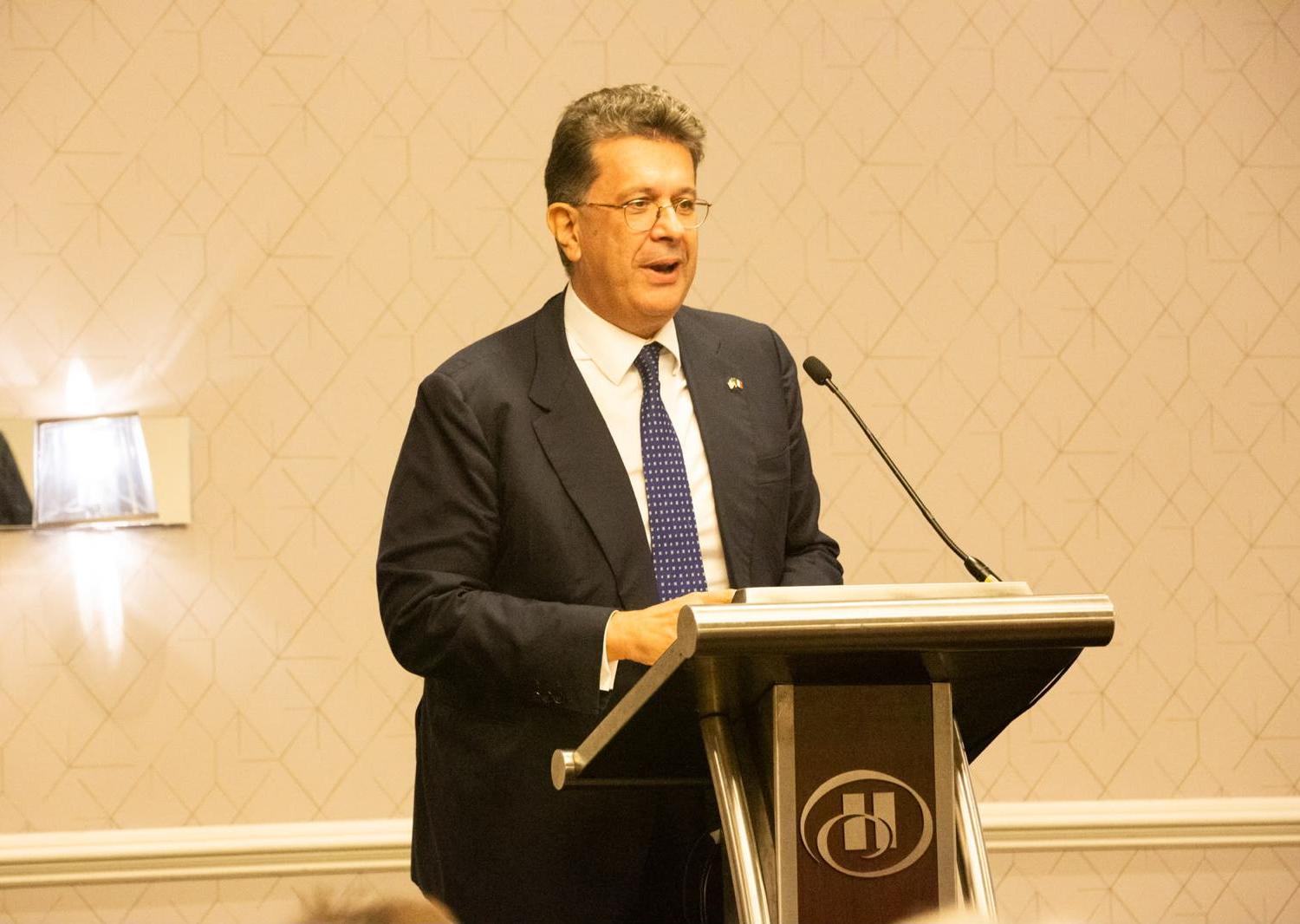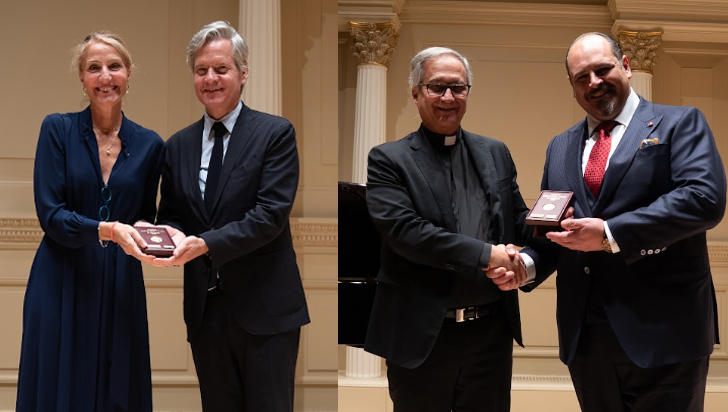


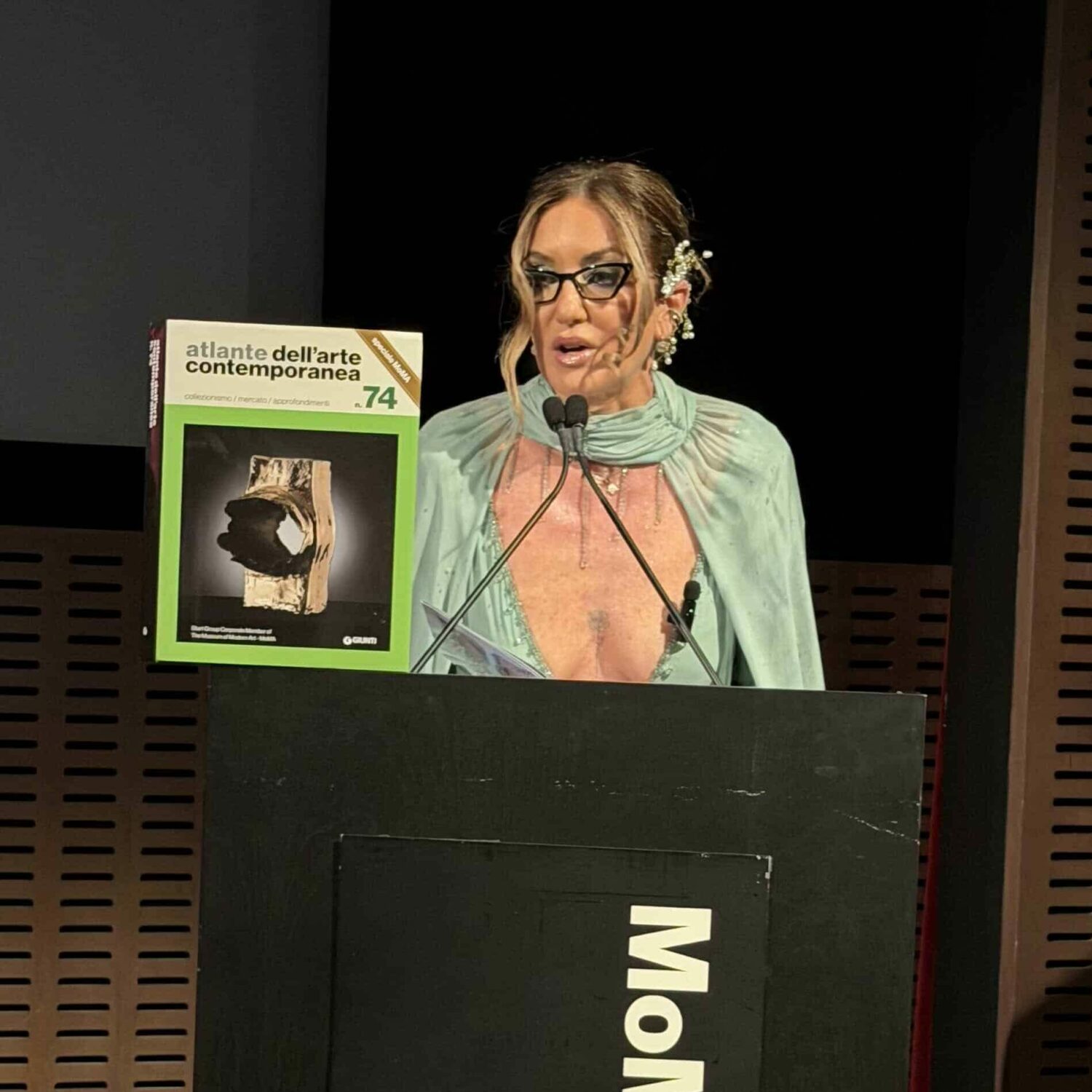
The first thing that happens at MoMA is not about art. Stefania Pieralice takes the microphone, looks at the audience and admits with sincerity that his English is not safe enough to face the presentation alone.
“To avoid straphalcions there is Giulia who will help me. ”
The room laughs. Giulia Rustichelli, translator and editor of the Atlas, takes place next to her. And at that time one of the most important cultural institutions in the world stops for a moment to seem distant. It’s a small detail, but it’s a good story about the morning tone dedicated to the Atlante dell’Arte Contemporanea di Giunti at the Museum of Modern Art in New York. Less celebration and more tale. Less formality and more people.
Pieralice immediately addresses a question that many artists continue to ask: what is a paper volume in the era of digital platforms and artificial intelligence?
The answer is nostalgic. It recalls Alan Bowness’s theory, historical director of the Tate, according to which the recognition of an artist passes through four levels: colleagues, criticism, market and public. The Atlas, explains, manages to enter three of these four levels simultaneously: through critical contributions, through market data and through national distribution.
In other words more than a book is a “strument”, definition that often returns during the day.
On stage, Susan Mains, representative of the Ministry of Culture of Grenada. The first thing is that it is the small Caribbean island and not the Spanish city of Granada. He says it smiling, obviously used to the misunderstanding. For seven years he has collaborated with START and the Atlas. It tells a reality very different from those that usually occupy the international debate on art.
Grenada does not own a museum dedicated to contemporary art. It does not have cultural infrastructure that other countries consider normal. And yet she came to her ninth participation in the Venice Biennale: “What we have are artists with passion”, says “Sometimes it’s really enough to start there.”.
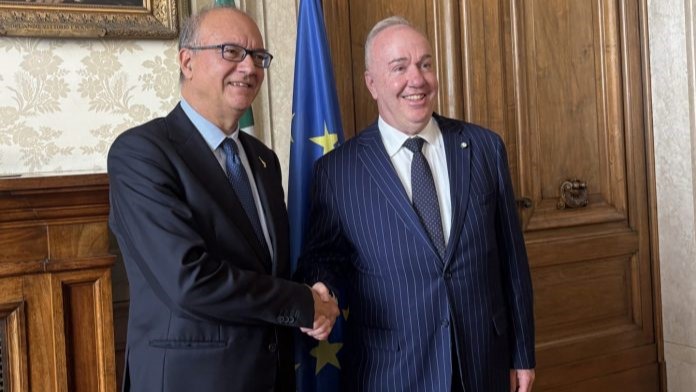
Alberto Pietrangeli, Deputy Director for European Integration of the Ministry of Foreign Affairs, recalls instead the role of the Farnesina Collection and the work done by the Italian Institutes of Culture in promoting contemporary art in the world.
Soon after Claudio Pagliara, director of the Italian Institute of Culture in New York. He’s almost on his feet. He’ll later explain that he’s kept talking to Marco Manzo.
His intervention is short but contains an interesting reflection. In a city like New York, he says, even the most important Italian cultural institutions remain relatively small. For this reason they must dialogue with the great institutions that surround them. It is probably one of the reasons why a presentation like this takes place right at the MoMA.
Among the artists present, Marco Grechi brings a research that revolves around a simple and universal element: bread, as a religious symbol, as a collective memory, as a reflection on food waste and consumption.
A work that interweaves spirituality and matter, tradition and contemporaneity, and which is told through references ranging from Burri to the American painting of Color Field to the most obvious references of Italian tradition.
Then comes Marco Manzo, one of the most peculiar stories of the day. Tattooer, sculptor and designer, has been working for years to move the tattoo out of the boundaries of the subculture and bring it inside the contemporary artistic debate.
The Macro, the Vittoriano, the Venice Biennale, the tattooed marble installations, the work on gender violence and the progressive opening of the institutions towards a language that has remained on the margins for a long time. In the afternoon, the new Contemporary Artistic Tattoo Manifesto will be signed at MoMA.
“I hope it’s a happy day not just for me but for all my fellow tattooists,” he says.
The last to take the word is Manuela Carnini, artistically known as Fridami, completely changing the atmosphere of the room.
Vascular surgeon, former Olympic athlete, mother of two children, survived violence. With his works he tells a rebirth.
Indossa Redemption, the dress that had already paraded on the red carpet of the last Venice Film Festival.
“Eight years ago violence disintegrated my life. For a long time, I believed that surviving meant simply living. I was wrong. ”
He reads a poem written for the work. It’s about walls that open, butterflies, wounds that become thresholds.
For a few minutes a room that until then had discussed cataloguing, distribution, market and artistic paths remains completely silent.
“I do not create to be seen. I create to give voice to what has been broken. ” The most intense and moving moment of the whole morning.
Many different stories that for a few hours, have been found in the same room of the MoMA to dialogue through a common language. Perhaps this is also the task of an atlas.
Not only to mention what exists but to relate worlds that normally travel on parallel trajectories and to show that sometimes they can still meet.
L’articolo Al MoMA with the Atlas of Italian Art proviene da IlNewyorkese.