


Second Avenue Subway is one of the longest and most complicated projects in the history of transportation in New York. It is spoken in different forms since the late 1920s, when the city began to imagine a new line along the East Side of Manhattan. For decades an intermittent promise has remained: announced, postponed, resized, then resumed. Now the MTA has started the work of Phase 2, which will take the Q line from 96th Street to East Harlem, with three new stations and a more direct connection to a city area that for a long time depends almost only on the Lexington Avenue Line.
The beginning of the work was announced in Harlem by Governor Kathy Hochul along with transport managers. The last attempt to extend the Second Avenue subway to the north dates back to the 1970s. In 1972 work began, then interrupted after the fiscal crisis that struck New York in 1975. Some incomplete tunnels, built and then left unused for decades. The new phase of the project also starts from there.
Stage 1 of Second Avenue Subway was opened in 2017 and extended the Q line to 96th Street, lightening traffic on the Upper East Side. Phase 2 will continue for about 1.5 miles north (about 2.5 kilometers), along the Second Avenue, up to 125th Street. There are three new stations: at 106th Street, at 116th Street and 125th Street, at Lexington Avenue. All will be accessible according to ADA standards, so also designed for people with motor disabilities.
The most important point will probably be the 125th Street station, which should become an exchange hub between the Q line, the 4, 5 and 6 metro lines, the Metro-North Railroad and the M60 Select Bus Service bus service for LaGuardia airport. For those living in East Harlem, the project does not only mean having some extra stops, but being able to reach more easily other parts of Manhattan and the city without having to almost always depend on the Lexington Avenue line, one of the most used and congested of the system.
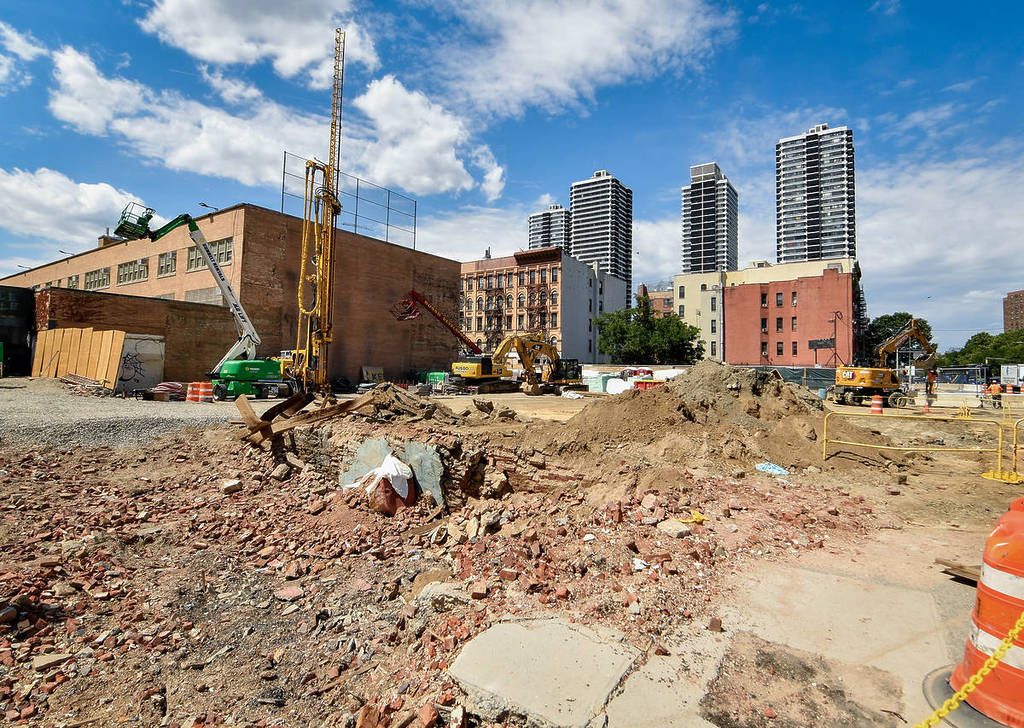
In this first phase, the work mainly involves the shift of sub-services, the preparation of the yards and the organization of the areas from which the excavations will start. The MTA plans to fall into the ground, at the beginning of 2027, the mechanical mills that will dig the new tunnels under the Second Avenue. Part of the work will also use the “cut-and-cover” method, i.e. the excavation from above, to build the stretch between 105a and 110a Strada and prepare the future station of 106a Strada. It is an invasive technique for the surface, but in some places it remains more practical than the deep excavation.
One of the most particular elements of the project is the reuse of the old tunnels built in the 1970s between 110a and 120a Strada. Instead of digging everything from scratch, the MTA intends to adapt those structures to the new line and to the future station of the 116th Street. According to project managers, this choice, along with contract and construction procedures revised after Phase 1, should allow savings of more than a billion dollars. It is important because Second Avenue Subway is often cited as an example of the very high costs of major public works in New York.
The opening of the new route is not close: at the moment it is scheduled for September 2032. Once completed, the extension should serve, along with Phase 1, about 300 thousand passengers a day and reduce up to 20 minutes some trips between East Harlem, the Upper East Side, West Midtown and the areas reached from the Q line to Brooklyn. Meanwhile, the state has allocated $25 million to study a possible extension to the west along the 125th Street, up to Broadway. It would be another extension, with three additional stations, but for now remains a preliminary phase: the real yard is what must finally bring Q to East Harlem.
L’articolo After fifty years the expansion of the subway has begun in East Harlem proviene da IlNewyorkese.