



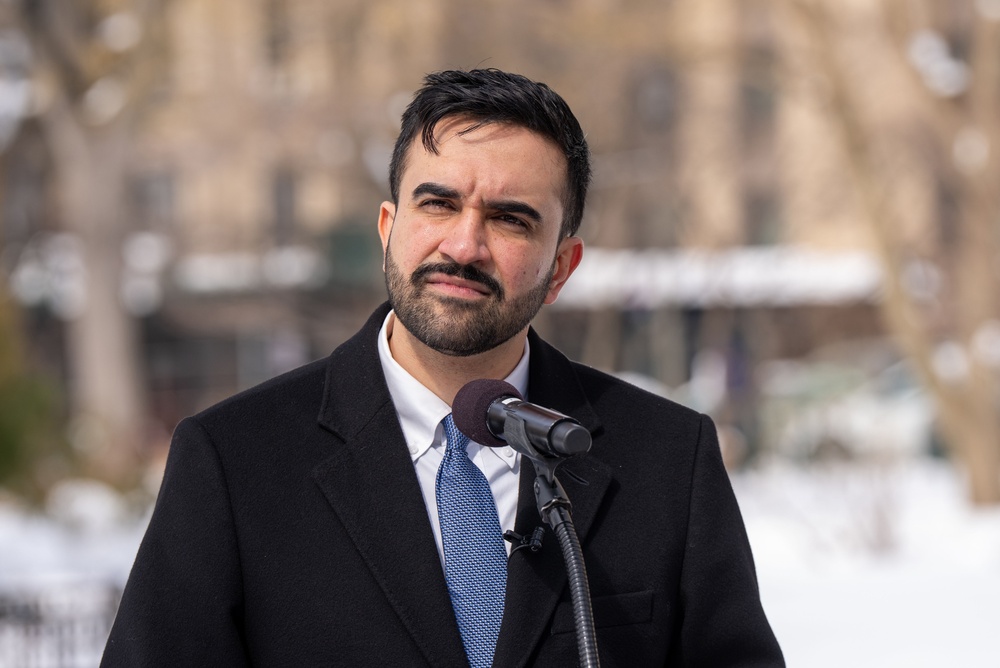
The proposal to introduce a tax on second luxury homes in New York was presented by the state governor, Kathy Hochul, and Mayor Zohran Mamdani as a way to ask for a greater contribution to those who own very expensive apartments in the city without living permanently. The idea is to hit the pied-à-terre – a cooler way to indicate second luxury houses – from over $5 million and use the proceeds to help the city budget, which has a deficit of several billion. According to estimates so far, the measure should bring about $500 million a year. But there is a problem: it is not clear how many are, and estimates change a lot.
At the beginning, Hochul’s office had talked about 13,000 interested homes, resuming an estimate contained in a 2023 comptroller report. Then the governor’s employees explained that that number was only a first hypothesis, to be checked better. There was also confusion about the main criterion: at first it seemed that the tax should apply to second houses with a cadastral value — that is, counciled value — of at least $5 million. But in New York that value almost never corresponds to the real market price, especially for luxury apartments.
By law, in fact, the city does not value many condominiums and cooperatives starting from the sale prices of similar apartments. The city does not say, for example: an apartment was sold to 20 million because other comparable apartments, in the same neighborhood or in the same type of building, were sold to similar figures. Instead, it uses an indirect method: it compares those condominiums with rented buildings of similar size and age and tries to estimate how much income they would produce if they were properties to rent. From that estimate comes the tax value.
The problem is that superlux apartments do not always have credible equivalents in the rental market. A penthouse of tens or hundreds of millions of dollars on Central Park can be sold to a huge amount, but there is not necessarily a rental building really comparable to use as a reference. In some cases, the high-end buildings are also compared with buildings that include apartments for rent regulated – that is, subject to public rules that calm the value, thanks to the rent stabilization system that lives in New York. For this reason the tax value may be much lower than the real price paid on the market.
According to an analysis of the real estate data company Marketproof, in New York there would be only three residential properties with an asseted value equal to or greater than $5 million. It is a fact that makes the short circuit clear: if the threshold was really calculated only so, the tax would hit very few properties and could not approach the 500 million promised. A very quoted example is the penthouse purchased in 2019 by financier Kenneth Griffin for $238 million, one of the most expensive residential sales ever recorded in the United States: in tax registers its estimated value is just under 7 million. Another luxury apartment in Midtown, sold in December for more than 21 million, has a tax value of approximately 1.3 million.
That is why the government office has corrected the shooting, explaining that the tax would not be based only on the tax value, but on a model able to identify properties over 5 million using different tools, including data on comparable sales when available. This solution, however, also opens up other problems. New York does not today have an official and uniform system to establish every year the market value of each apartment. Marketproof has tried to build an analyzing over 1,14 million tax particles and using an indirect indicator to recognize second homes: sending the tax bill to an address other than that of the apartment. By this method, the company estimated about 6,380 potentially affected properties, many concentrated in buildings such as Central Park Tower, 432 Park Avenue, One57, 220 Central Park South and 15 Central Park West. Only the 280 units of these five buildings could generate more than $100 million a year.
However, it remains the most complicated part, i.e. transforming a private estimate into a public tax, which can be defended against taxpayers and, above all, the courts. A comptroller report Mark Levine warned that the Department of Finance of the city should probably check the statements of the owners on those who live or do not live in the apartments, and that errors or weak controls would reduce the revenues and increase appeals and lawsuits. There are then difficult cases to classify: apartments headed to companies or trusts, units bought by people living outside the city but rented to New York residents, houses used for short but not really empty periods. For Hochul and Mamdani the tax works politically because it hits an easy target, the millionaire houses left empty by the rich. But making it work also means establishing, with precision and every year, that a house is worth more than $5 million and is really a second home. It’s not easy.
L’articolo The tax on the second home of the rich has a problem not recently comes from IlNewyorkese.