



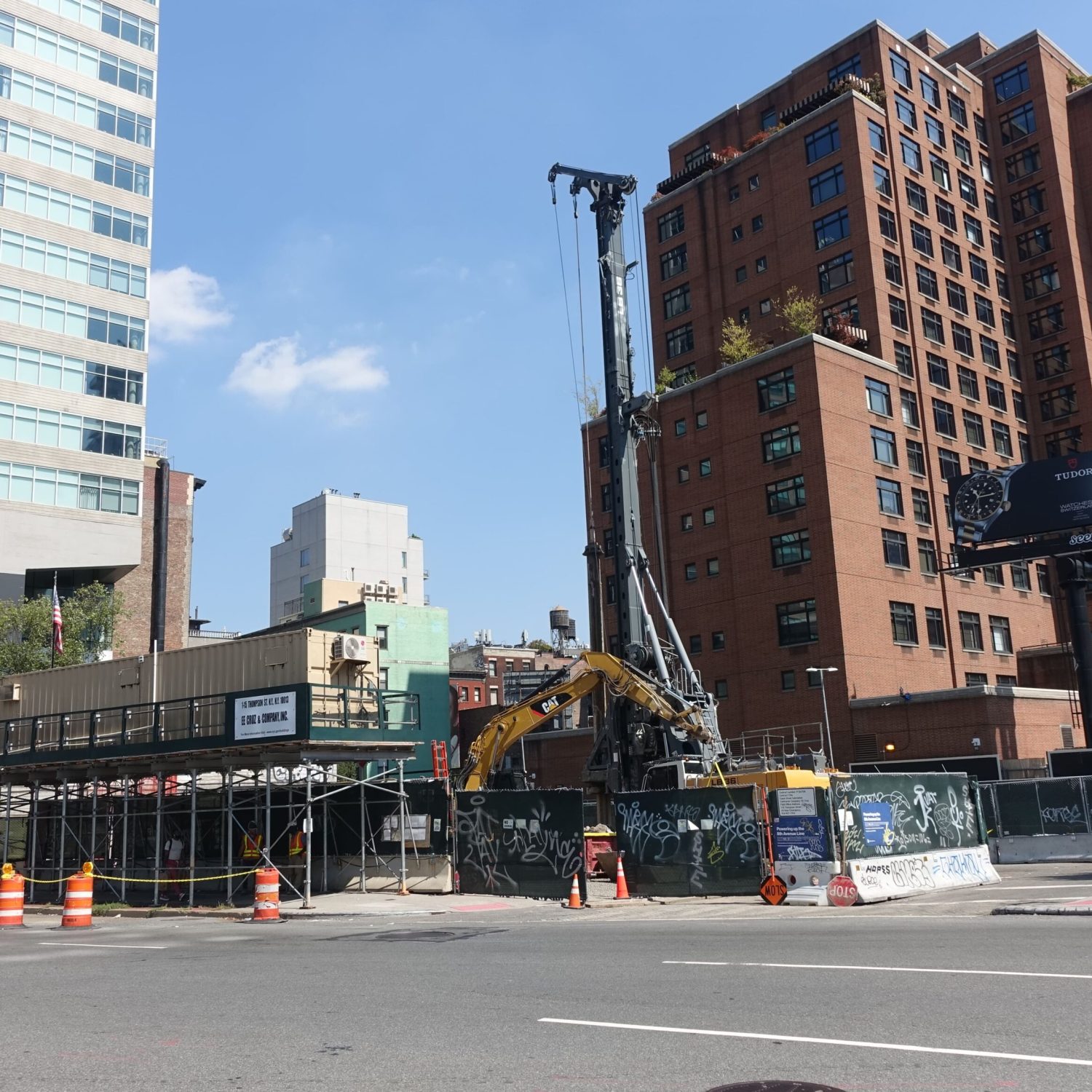
In Manhattan, at the corner of Canal Street and Sixth Avenue, there is a basketball court that has become a yard for almost four years. It is called Grand Canal Court and is located next to one of the entrances of the Canal Street metro station, used by lines A, C and E. In 2022 the Metropolitan Transportation Authority (MTA), the agency that manages public transport in New York, started the work to build a new electrical substation under the field, promising to return the space to residents once the intervention is completed. The reopening was scheduled by the end of 2024. It never happened.
Now the MTA and the Department of Parks and Recreation, the municipal agency that manages the parks, ensure that the field will be again accessible by the end of November 2026. But according to an inspection carried out in recent days by Gothamist, the yard is still far from having the appearance of a sports space: the ground has not been paved, the baskets have not been installed and the workers are still working in the pits dug under the road level.
It’s not the first referral. In December 2022 the MTA had indicated the end of 2024 as a term of work. Subsequently, a sign on the construction site reported April 2026. In May, the agency had insured the local newspaper Tribeca Citizen that the camp would be ready by the end of the summer. Even that deadline passed without residents being able to play again.
The intervention concerns an infrastructure necessary for the operation of the metro. Electric substations transform and distribute the energy used by trains and the new Canal Street structure is part of the interventions aimed at improving the reliability of the service on the Eighth Avenue line. The project plans to reconstruct the basketball court above the substation, adding new benches, a fountain, lighting and fences.
Meanwhile, however, costs have also increased. According to the documents of the MTA quoted by Gothamist, the project budget was 45 million dollars in 2014 and arrived at 83.7 million, an increase of approximately 86 percent. The agency attributes the increase to several problems encountered during the work, including the need to intervene on underground infrastructure not initially planned. The figure concerns the entire infrastructure project, not only the remaking of the field.
The yard also modified the passage of pedestrians. Those who need to reach the entrance of the subway on Sixth Avenue are forced to use a narrow space next to the fences, while the surrounding area has been occupied for years by the materials and structures necessary for the work.
Before closing, Grand Canal Court was mainly used by the boys of the nearby schools and the inhabitants of the neighborhood. Herb Tam, one of the organizers of the Chinatown Basketball Club, told Gothamist that many students arrived directly from the subway to play. According to Tam, the loss of a sports space daily changes the way the road is lived. After four years, he observed, many of the frequenters will probably find other places to play.
Grand Canal Court before the beginning of the work
The land on which the field rises has a particular history. Its triangular shape derives from the southward extension of Sixth Avenue, built in the 1930s. The intervention left some small plots of land between the new roads, later transformed into public spaces. Andrew Berman, director of the Village Preservation Association, explained that these small parks have maintained over time an important role in the life of neighborhoods.
Not all, however, ask that the Grand Canal Court return to be a basketball court. An online petition, which has collected about 2,200 signatures, proposes to transform it into a dog area. The promoters argue that in the neighborhood there are spaces of this type and that the land could be used by a greater number of residents. The MTA and the Parks Department have confirmed the original project, which provides for the restoration of the sports field. The new deadline is the end of November. Alberto Roldan, head of the Parks Department for Manhattan, said that the administration intends to return a renewed space to the community. It remains to be seen whether the works will actually be completed in the announced time. A few days from the beginning of the month, the camp is still a construction site and the inhabitants of the neighborhood are waiting to be able to use it again.
L’articolo A basketball court has been closed for four years for underground work proviene da IlNewyorkese.